Episode Transcript
[00:00:14] Speaker A: Hello, welcome to Call It Like I See it, presented by Disruption. Now, I'm James Keys and on this episode of Call It Like I See it, we're going to continue our streaming between the Lines series and discuss the 2019 Justin Pemberton directed documentary Capital in the 21st Century, which currently streaming on Netflix.
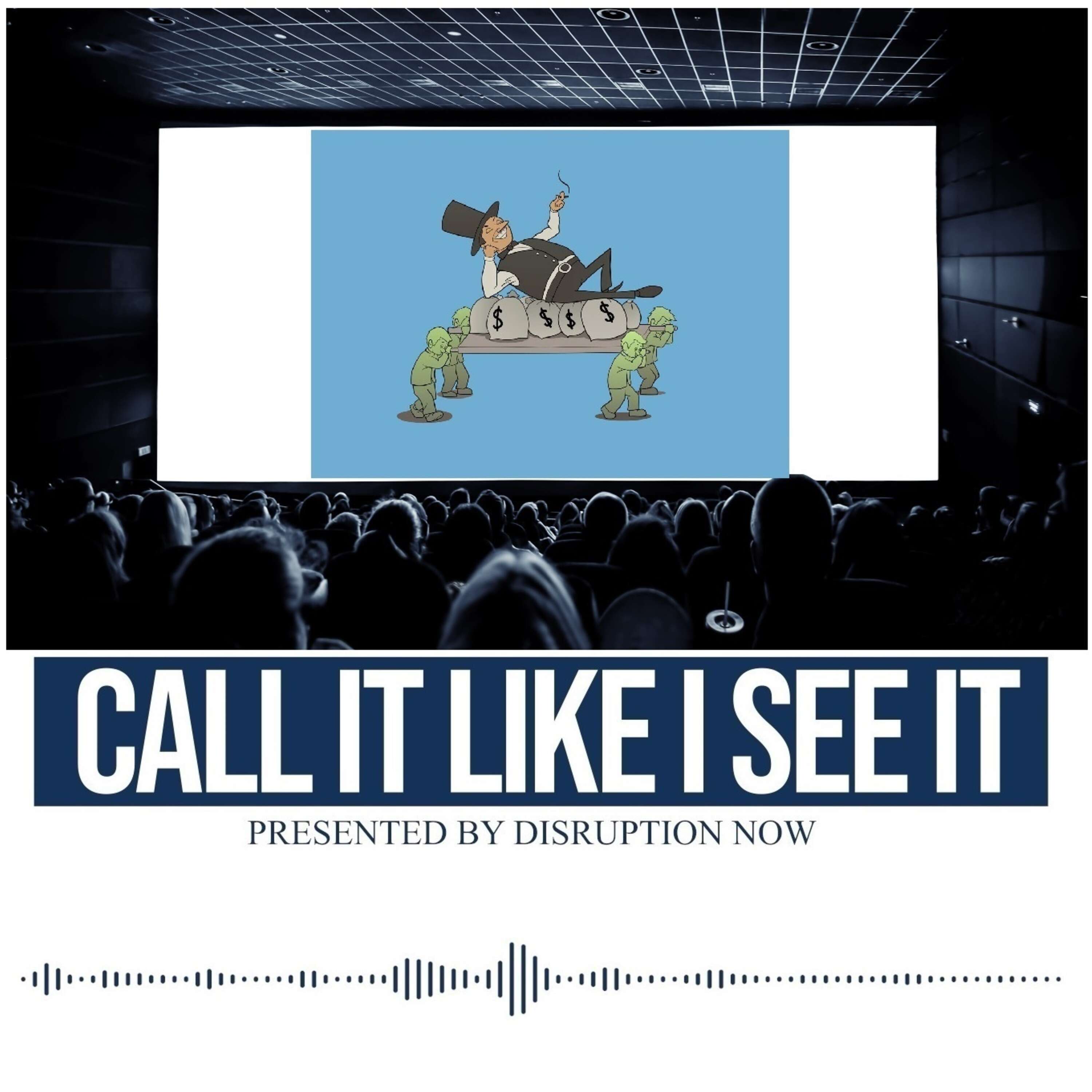
Now. It's based on a 2013 best selling book by Thomas Piketty. And that's the French way to pronounce his name as I understand it. And now the book is also entitled capital in the 21st century. And the documentary provides a fast paced and fascinating look at the interplay between wealth and power, between inequality and social instability, and how these interrelated things have played a large role in how societies are run and how history is unfolded.
Joining me today is a man who's dedicated his mind to serving capital, even though his heart still belongs to the people and to labor. Tunde. Ogunlana Tunde. Are you worried you might say too much today?
[00:01:12] Speaker B: I'm always worried, bro.
[00:01:15] Speaker A: I
[00:01:15] Speaker B: always worried about that. Let me say that.
[00:01:17] Speaker A: Yeah.
[00:01:19] Speaker B: Other stuff, not that much.
[00:01:20] Speaker A: Cool, Cool. Now, we're recording this on September 20, 2020, and I want to jump right into our discussion today.
Economic discussions can oftentimes be pretty dense, but this documentary was about as engaging as something on this subject could be. It gave context to a lot of what's happened over the past couple hundred years, provided a glance into the future and what we may be walking into, and made great use of video and movie clips and had a dope soundtrack. But as far as content, Tunde what stood out most to you?
[00:01:51] Speaker B: It was a great look at the last, let's say, 200 years of Western style kind of capitalism through the lens of also the colonial experience. I think, you know, the British and the French, they spent a lot of time on their empires and how it all culminated into really the First World War and then I think the Germany of capitalism Post World War I.
[00:02:15] Speaker A: Yeah.
[00:02:16] Speaker B: And so I think it was very, it was very well done in that way that, that they covered a large period of time, but it was very digestible. Understandable. And you make a great point too, because a lot of the footage they showed was very good because it was just a good reminder. And that's one thing it made me feel.
And I think a lot of people should watch that documentary during this period of time, no matter what their kind of economic or political beliefs are, because it's just a great reminder that whatever we feel are tensions that we see in today's world.
And I know a lot of people are worried about what they see out there.
You know, this has all happened before to societies. And so we're just in another kind of cycle of it.
And it says.
[00:03:01] Speaker A: But I don't know that that's encouraging though, because we've also seen a lot of tragedies and terrible things that have happened in response to certain things. So
[00:03:08] Speaker B: I
[00:03:09] Speaker A: don't know if it would make you feel better or worse.
[00:03:11] Speaker B: Well, let me put it this way, and you're right. I mean, look, I'm not saying I know what's going to happen from here and if it's going to
[00:03:17] Speaker A: happen, but more so what I'm saying is I don't think people should take solace in the fact that where we are now may have happened before.
[00:03:24] Speaker B: Well, I would, because what I'm saying is through awareness, right? I mean, if we don't want things to go totally off the rails, then at least we should recognize that we have been at these points in our societies generally at various points in times in the past. So if we want to at least try and have some perspective on how to deal with this current moment and maybe your point, avoid maybe some of the more negative things that have, that these eras and these periods of time have formed into as they progressed historically, maybe we can find certain patterns or, or, or just look at the behavior of things, you know, those that have done things in the past. And it was a good reminder. I'll give you an example as, as I guess we get into it here, you know, when they were talking about the Great Depression and all that, I mean, in my mind, just because of what I do for a living in the financial services area, it's more common to my brain here the way that the Federal Reserve did not respond after the crash of 29 and did not create liquidity for the economy, one could say directly led to that level of unemployment, which then led to the levels of poverty and all that in the 30s. So one can say by observing that in 2008, the former Fed chair Ben Bernanke and the powers that be at the time made the decision, okay, we know what happened then.
We know what happened when they behave when the Federal Reserve behaved that way. So at least let's try something different. And you know, we've talked about it on other shows whether we agree or not with printing money and maybe some of the long term consequences that might occur. I think we can look back and say that the Federal Reserve's action between 2008 and 2013 with the quantitative easing, at least avoided the 1930s style depression. Not to say that there wasn't economic pain and people weren't hurt, but we didn't have that type of economic event.
They also talked about how you got to some of those tough events like in the early 20th century, the 30s and the 40s, the fascism in Europe and all that.
It came about because of the excesses of the aristocracy.
And so again, I think through being educated on how these things get created, hopefully we would be able to put guardrails in place in society that would keep them from happening again. And I think part of probably what we'll get into a bit more today is how those guardrails that were put in place after, let's say, by the middle of the 20th century have also slowly been eroded, which has kind of gotten us right back to where all that started. So I'll yield the floor here.
[00:06:06] Speaker A: No, that's good, man. I mean, but what got me, man, and this was just like, it was fascinating, was the psychological study based on the Monopoly game that they did where that psychologist, Paul Piff, who is a psychologist at Cal Irvine, where they had like, it was a random game that they set up. And this was just studying how people behave in certain scenarios. And so they had two people come in a room by coin flip. One would be the privileged player and one would be the player who had all the disadvantages. And this would play out. The rich player got double the money, got to move twice as fast, and basically got built in structural advantages in the game. And so as they played the game, what they observed with this was that the two players who walked in a room not knowing that they were going to be given advantages or given disadvantages, they. Their behavior changed. And a player who was designated by coin flip as the rich player, but who got more money throughout the game and had advantages built in, structural advantages became more dominant, became ruder, louder, more likely to brag, things like that, less compassionate. And what the conclusion from that was was that our minds seemed to translate naturally without us even trying to do so.
Being better off, like not getting, not becoming better off, but actually just being the state of being better off with being better.
And that just jumped off the page to me. I had never seen anything like that enacted. Because a lot of times we. Everyone assigns, we assign what happens to us or where we stand in society. And we look at other people and say, oh, well, they act like this and they act like that, but we never think of the fact that maybe if we were in that situation, we may act the same way. And maybe there's a lot of this is just your behavior depends on the circumstance that you're in. And we're hardwired in certain ways to behave a certain way. And so that they can take people randomly off the street, either put them in a position of privilege or put them in a position of non privilege, in a detrimental position, and watch their behavior change on camera. They were recording these things and they did it hundreds of times and they observed the same thing every time.
That's human. That's us.
And if that's us, then it makes a lot of sense. Why, where you're either born into society or where you stand in society, how your behavior can change and how people can treat each other and how we can end up, as you said, end up in these scenarios where we're reliving history over and over again.
[00:08:37] Speaker B: Yeah, no, I think that it was a fascinating study and it first made me kind of laugh to say this is exactly why I'm cynical about the future.
More so because we're hardwired to do this. You know, that was a fascinating thing that just, just by playing Monopoly, you know, I actually wrote down a few things, you know, quotes from some of the, the researchers and, and, and, and from the documentary itself. And one of it was none of the rich participants, meaning the ones who were given the ability to be wealthier to start the game.
It says out of the hundreds of people that went through this study, not one of the rich participants acknowledged that the initial coin flip is why they actually did better.
[00:09:19] Speaker A: Yeah, yeah, exactly.
[00:09:20] Speaker B: Like you're saying, it all came in. And so what it got me thinking was
[00:09:23] Speaker A: like, what are the odds of that though? Like that is, that's mind blowing.
[00:09:27] Speaker B: And it's. And another quote was you see people acting because of the flip of a coin, like they deserve to win. You know, and this was telling to me, because you know what? This helped me actually in my mind draw a line to which may not be obvious to some is systemic racism and the idea of privilege in our country. Because I think it's a very tough conversation.
And we know we've had it going on publicly in a sense in the country over the past few months, since the George Floyd stuff and all that.
But there was another part in the documentary when they were talking about the post war boom after the World War II and the growth of the middle class. And I know there was a prior show where we talked about the GI Bill.
And one thing that I was reminded when I was looking at that part is America is so unique because at the same time this was going on, what is not as focused on in terms of history and how we're educated as Americans is that the reality is that this was happening with a backdrop of racial discrimination from the federal and state level.
So you had federal agencies and states, all 50 states, engaged in the active decision that only white Americans would be really able to participate in this type of capital experience.
And so what? Well,
[00:10:55] Speaker A: just let me say this a little more succinctly. Like, basically, all of the things we point to, or most of the things we point to as being instrumental in bringing about this incredible middle class. In the 50s and 60s and 70s, black folks were by rule excluded from, like, the GI Bill, you know, like, all of those things. Like, black folks could not participate in those things. It was kind of like the Monopoly game, where it was like.
[00:11:18] Speaker B: Sorry, go ahead. No, finish that part.
[00:11:19] Speaker A: Yeah, it was kind of like the Monopoly game, like, and this wasn't their intention. I saw the same thing, by the way. I saw it as a issue of privilege, as an issue of giving structural advantages. Like, I think the three ones they highlighted where you got. The poor player got to roll one dice, whereas the rich player got to roll two. The rich player started with twice as much money at the very beginning, and the rich player got 200 every time he passed go, and the poor player got 100 every time they passed go. And both players knew this. Both players knew what the standing was. And so it was like, it was systemic. It was structural advantage built in by the rules. And so, yeah, I made that same connection. Like, wow, that's kind of like 1950 in America where certain people can do GI Bill and certain people can't buy these classifications just by classifications. It's coin flip in terms of what household you're born into or what mother you had, you know, that. That determines that. And. Yeah, and on the back end, it would make sense. People can't even see that it was that advantage that gave them the leg up. So, yeah, it's crazy that we both saw that, but I
[00:12:17] Speaker B: mean. And that goes back to why I think, you know, honestly, history and educating a population about what and why things happen is so important, because, I mean, that's exactly right.
And just to give a quick history thing to the audience, because a lot of people don't know this stuff. I mean, the federal government, by law, excluded blacks from the GI Bill, for example. So you had 10 million Americans that were given free college education in this country and the majority of black veterans from World War II were excluded from this.
The FHA, the Federal Housing Administration promoted redlining, you know, and the discrimination of blacks moving into certain middle class neighborhoods. So, and then they talked about in the, in the documentary too that home ownership in the United States was one of the foundations of, of multi general wealth creation.
So you had this whole part of society, meaning black Americans to your point, that were kept out due to the systemic nature of the rules in the game of capitalism in the United States.
And so, you know, it's not unbelievable that if those laws began to get changed only let's say two generations ago, you're talking maybe the, you know, the civil rights act of 65, but then you had housing discrimination and all that. Those are really all done in the 70s.
So you're talking, you know, 45 years of legal equality and you know, people, again, without the knowledge of that kind of history.
A lot of white Americans don't understand why certain things like affirmative action, all that were in place.
[00:13:56] Speaker A: But Tunde,
[00:13:57] Speaker B: Tunde,
[00:13:58] Speaker A: the point of that Monopoly study was that even with that information it still wouldn't compute. Like, which is even crazier, like we've always said. But let me, I want to keep moving though. One thing I will mention that wasn't said in there, that kind of jumped off the page that I would want to do some more research on which I just haven't had a chance to is the psychological. We see they observed and documented the psychological effects and they talked about in the documentary at least they may have documented the effects on the unprivileged person, the underprivileged person as well, but that's what I would want to know. Like does that alter the behavior? Did they observe consistent alterations in the behavior of the underprivileged person knowing that the privileged person sitting across the table from them had all these advantages? Did that change the way that they acted or, or that they engaged and interacted with the other person or how they played the game like that to me would be interesting as well
[00:14:47] Speaker B: because I'm sure they probably have done it. I mean, yeah,
[00:14:50] Speaker A: I'm sure it's
[00:14:51] Speaker B: observable. So we should look it up and discuss it on a future show. And one of the things just to finish on this point because I think it's very important. I've had a lot of great conversations with friends of mine about this idea of systemic racism and a lot of people don't understand what that means. And that's, I think the point why we stopped on this study, it was a great way for us, or I know anyone, to really see that the human mind, when given an advantage over someone else, let's say that just most of the time the mind won't acknowledge that it was given some sort of advantage.
[00:15:33] Speaker A: This happens in the unconscious. This is not a conscious
[00:15:35] Speaker B: thing. We default to thinking, oh, we're just smarter, we're better, we're this, we're that. So my point is that when you have then the state, meaning the federal government or state governments that create a system of inequality, just like this monopoly study, it was a system of inequality in the game that was created to study how human beings will act, then it's a good way to see that when the system is set up a certain way, those who benefit from the system acting that way will find other reasons of why they're performing better than the than others on that same kind of chessboard.
Instead of acknowledging just that the DAC was stacked in their favor, the deck was stacked in their favor, so to speak. So that's why to me this was a very interesting study because. And that's why.
[00:16:31] Speaker A: And it was done though now just for the point of the documentary, it was done or they explained it in the context of financial inequality and wealth inequality in terms of the privileged class, the 1% or whatever, and how they may not see the like, their brains obscure from them. Their brains don't allow them to see how the benefits, the structural benefits or whatever benefits that they have have contributed to their success. Their brain doesn't allow them to see that. And so we know, both of us kind of saw that and say, hey, that could apply to any privileged class. So I mean it's. Well, one of the overall premises of the documentary was that we're in a period of growing inequality. I mean, and this was referenced many times as a return to 18th or 19th century Europe style inequality with an aristocratic 1% and everyone else as peasants. Now this stands in stark contrast to the post New Deal period that we're kind of coming out of right now, or that it started unraveling in the 70s and we've been coming out of since then, but where economic inequality was at what was probably its lowest sustained level ever in the world.
Do you think that this is real with them talking about we're going to be looking at 18th, 19th century style Europe inequality? Do you think that's real or do you think they're exaggerating? And also, I mean along with that, do you think it's real? And Then also, how big of a deal is it? Just from an economic standpoint, the way we're used to living life.
[00:17:53] Speaker B: So I think it's real how big of a deal it is. I mean, obviously, I think just by the definition of our conversation, obviously any of this stuff's a big deal because it deals with macroeconomics and societies and leading to things like social unrest or wars on the bad side and leading to good things when you have the right kind of economic prosperity. So I do think it's a big deal. Now, what I would say is this, I think, talking about. We just got done talking about the monopoly study and how human minds work. So let's recognize that, you know, all of us are usually the general that fights the last war, meaning we tend to look at kind of the last thing that happened that's similar to something that we think can happen again and think it's going to happen just that way. And I think when I, when I was thinking about that question as you're asking it, the thought that came to mind is history doesn't repeat itself, but it rhymes.
So do we have a similar style of inequality? I think the answer is yes, meaning we know that we have extremely concentrated wealth at the top.
I think the documentary pointed out in the UK as of now or last year, whenever the documentary was made over the last year or so, the top 1% in the United Kingdom owns 70% of the assets in that country.
So I think that's an equivalent to what they were talking about. I think in 1914
[00:19:14] Speaker A: or
[00:19:15] Speaker B: that period when the aristocrats of Germany and France and England all kind of had the same type of asset, you know, ownership and percentage.
Now, are we going to have the exact same result of a world war and then an economic collapse and all that? I don't know. I mean, that's, you know, the future will tell that now. I tend to think it probably won't be exactly the same. I think one thing, and we alluded to this earlier in the show even, right, that the Federal Reserve, for example, Learned from the 30s.
So one can say that there's been some learning that's happened already in societies and world governments. So I think we're back there again. Yes. Is the result going to be the same? I'm not sure. We'll need to see how that plays out, because as we alluded to earlier, one of the cool things I think this documentary really reminded me of was really how new this system is for humanity. When they showed the Industrial Revolution beginnings with the big Smokestacks and all that in the black and white footage.
And they talked about the kind of idea of factories and productivity. And this was the first time that capital went from really like monarchs and landowners to these industrialists who just had a different way of making profit and reinvesting those profits.
So I think that what we're looking at is humanity has basically created a new system over the last few hundred years that is also that system itself has its own growing pains.
[00:20:46] Speaker A: Well, I don't know, I took something different from what you're saying there. Like, yes, the Industrial Revolution was an evolution. Basically it changed. Like prior to that, you have landlords, literally like people own the land and they own the people on the land, you know, the peasants and so forth. The Industrial Revolution. Then the capital became the place to be for capital became with factories and production and things like that. And then they also. But they drew the through line also that that's becoming outd as well now, more so that the big capital, now the big place where capital is really growing now is with the information agent and where you don't even need labor, the same amount of labor at all. Like with the Industrial Revolution, you still need labor. So there was an interesting way they showed that in terms of how the. How capital has evolved to become more efficient at reproducing itself, more efficient at. It was relatively harder to grow capital when you did it based on your working your people was working the land than it was to do with people working in factories. And it's even easier to do it with, with a few programmers working anywhere in the world on software or in the information age type of stuff. So I mean, that was one thing that was very interesting to me. And as far as whether it's real, I think it's real. I don't think they're exaggerating. I think that one of the lessons here was that the people who have the capital, the capitalist, the 1% or whatever, are always trying to further entrench their position.
And part of the book went in, or the book, part of the documentary. And I'm sure the book. We did not read the book for this that it's based on, but we watched the documentary and part of that was based on how hard capitalists work to shape the way that everyone else thinks to justify. Because people see the inequity, people see it. And so you end up with. One of the quotes stood out to me there was where you have the capitalists arguing that inequality drives progress and innovation, but then you also, you see it in other areas, you know, where they're making up stuff like trickle down economics and it doesn't work and they excuse it and things like that.
And the mindset, that was one of the things in there. You're not poor, you're a millionaire and waiting.
And so, so much effort goes into concentrating wealth. Like they're not just chilling, like. And so it's interesting from that standpoint because I always come back to the fact of who wants it more. And in these type of situations, a lot of times it does seem like the 1%, the capitalists want it more than the labor, want inequality more than the labor wants equality. And usually, and that's kind of the pendulum you see, is until they push it too far, then either everything falls apart and you gotta rebuild a society or labor revolts, then that's usually the cycle we end up back and forth with. But I actually think that history has proven that less inequality, you're not going to get rid of all of it. You know, like that, that was, I guess, the thing with communism, you know, like you're not going to. It shouldn't be. Everybody has the same thing, no matter how hard they work, no matter how much talent they bring to the table. But lessening inequality, making how much you have more tied to how hard you work and your talent as opposed to how you're born or anything like that. The history seems to mean to me or to show to me that that actually drives the competition, that drives the innovation, that drives the progress much more because you're involving more people, you're involving more people competing.
Because the thing is that if you're constantly trying to entrench your position through political moves, through law, through regulation, you're not really trying to compete either.
You're trying to set it up so that you can't lose. And so that to me, if that's always going on, then it stands to reason that this is being whatever progress was made from the New Deal and that exception in this time of history, that that's being unwound because conceivably, ever since it was enacted, they were trying to unwind it, Right?
[00:24:41] Speaker B: Yeah. No, and I think it's interesting you say, because it made me realize as you're saying this, that really no one likes competition. So this all goes.
It's another thing I took out of the documentary honestly, that this is all a manifestation of human psychology, all of it, right? Like this isn't like the natural laws of physics and gravity and the sun's going to show up Every day and all that. I mean, this is, economics is really a way that humans organize themselves to deal with things like that, right? Capital, labor, all this stuff. So when I say that, and it made me realize about, no one likes competition. I mean, look, I don't like competition, right? If I was the only guy in America doing what I was doing, I'd be a multi billionaire, I'm sure. And just like we talked about the Monopoly game and this is where I'll fall on my own sword as a human. I'm sure I would be the same way. In that position, I would start coming up with ways to justify why I work so hard and why I'm, I, I, it's, it's, I really don't like monopolies and I, I really like competition. But because of this or that reason, you know, I deserve not to have competition. I should be able to do it this way. I just think that's how most people are.
[00:25:46] Speaker A: Well, that was the point. I thought, that's what
[00:25:48] Speaker B: I'm saying. I'd probably be like that too. So that's why it's interesting that really. What, what, what? And, and this is where it gets, when you're talking, it made me realize. Part of the documentary discusses the idea of refugees, the European refugees who left Europe over this last 200 years, let's call it really 100 plus years ago. When you're talking specifically as they talked about the European refugees that went to the United States, Australia and New Zealand, specifically because those three countries saw the type of migration and the refugees that really wanted to start a new system, they didn't want to have the monarchies and the aristocratic thing and all that. And so it was interesting to me that another thing about human migration and patterns, a lot of the descendants of those people in these countries don't really think of themselves as the descendants of refugees who were trying to escape an oppressive system.
And I learned a lot watching the documentary. I didn't know that in 19th century England it was a crime not to show up to work, like they were putting people in jail for going on strike.
So when those immigrants immigrated to Australia or the United States, they came with that baggage already saying whatever we support in terms of the government that's set up in that country, we don't want to see that.
And so that's why I say it's interesting.
[00:27:20] Speaker A: Well, I mean, yeah, man. If you look at American history through that lens, a lot of things make sense. Like the land of the free, the way our government is set up so that you don't have birthright. Correct. Aristocracy. Yeah. Like
[00:27:35] Speaker B: social mobility,
[00:27:35] Speaker A: all men created equal. Like all of that stuff was repudiations of the way it was going in Europe at that time, you know, 17th, 18th century Europe. So
[00:27:46] Speaker B: there was a quote I wanted to read though, because you said something that made me realize or reminded me of this. And it's like the other side of the psychology, because sometimes I think you're right. Like the 1 percenters, they control the capital, but they also control the messaging. Right. Like ever since the days of the printing press, also the wealthy, just like the Hearst family or, you know, Rupert Murdoch today, for example, wealthy, also want to control the message. So how. Well,
[00:28:16] Speaker A: that's how they control the media. Yeah, that's how they do it.
[00:28:19] Speaker B: And so it's interesting because sometimes, you know, people like you and I with some of this knowledge might look and say, how come, how come, how come some people, they vote against their interest if they're at the lower middle class level and all this. And it goes back to your question, which I think is, I'm very curious now for us to look at this monopoly study and see if they report on the behavior of the person that was the underdog, you know, because one of the quotes, one of the people that was being interviewed for the documentary says, she said, you know, kind of the greatest thing about like the United States and the way that people think. Right. Is that she said, you're not poor, you're a millionaire and waiting. And because of that, don't worry about inequality, just keep working hard. That that's like in our country, the message from the 1% to the rest of us, that when you think about, well, how come people that should have an interest, let's say in a progressive tax system or should welcome redistribution of wealth
[00:29:21] Speaker A: or back down or. Yeah,
[00:29:24] Speaker B: yeah. It's like, it's almost like this propaganda that, well, I'm not poor, I'm gonna be a millionaire one day. So I want to make sure that that group is okay so that when I get there, I'm okay too. And I was thinking, I never heard it put so succinctly like that. And I thought,
[00:29:40] Speaker A: you haven't?
[00:29:41] Speaker B: No. I don't know, maybe there's the way she
[00:29:43] Speaker A: said it with all
[00:29:44] Speaker B: the images and docum documentary, it all came together in my head and I was like, man, that's the greatest story ever sold.
[00:29:50] Speaker A: Yeah, that's the con. That's, that's, that's a big part of the con.
Well, I mean, well, that's part of it. That part of it is that. And then there is also the. The divide and conquer, you know, which is as old as inequality is too. And so, you know, like, being it that we're in a period of inequality, what did you think of the links that were pointed out between, like, inequality and social instability and things like xenophobia?
[00:30:14] Speaker B: I think
[00:30:14] Speaker A: that. Well, let me
[00:30:16] Speaker B: sor.
[00:30:17] Speaker A: From the lead in to World War I to the rise of fascism in Germany and then World War II, I mean, literally, they said that our times now are beginning to echo the early 1900s. And we see how. That's why when I challenged you earlier, I'm like, well, if we know that this history is rhyming, we're in line for some terrible stuff that's about to happen, at least unless we can figure out a way to prevent it.
[00:30:43] Speaker B: No, and I think, you know, I was definitely in the first part of this conversation on that. I was really focused more on the economic side of that of my. My answer. But you're right, from a kind of social unrest and the, you know, human social, political spectrum of it, I think, yes, we're definitely much history looks like it's repeating itself in that way more than it's rhyming. That's what I say. Maybe I should. I should really differentiate that from an economic standpoint. I think it more looks like it's rhyming from the political unrest side. Yes, it looks like it's repeating. And. And I think it goes back to what we alluded to earlier, that, you know, again, we're all human beings. We tend to think we're so much smarter than people were maybe a few hundred or a few thousand years ago, but we're still driven by all the same. Same emotions. Right. And. And it was interesting because they were saying that in these kind of times, people kind of revert back to what's comfortable to them. So it's their national identity.
It's things like religion.
It could even
[00:31:45] Speaker A: be ethnicity.
[00:31:46] Speaker B: Yeah, ethnicity. And even things like that we see at the micro level. Right. Like when I would say national identity, you know, we're Americans, you could say, okay, it's an American, which, you know, America first policies make America great. Again, all those kind of things lend themselves to those themes.
But then we even see it in a micro level within our country. Right. You've got states. Well, we're in Florida, so we're better than Georgia or so on and so forth. So we have this way as human beings of constantly dividing ourselves and putting ourselves in smaller, smaller boxes when we feel insecure. And so I think because of that kind of psychological trait of the majority of human population, I definitely think that's being repeated right now. And it's interesting because it's the same things that cause it. It's the social, really economic unrest leading to then the social and political unrest and the kind of finger pointing and so.
[00:32:43] Speaker A: Well, yeah, they took a lot of care in the documentary to point out how you can draw a direct line from rising economic inequality to rising social instability. And people, the poor looking at other poor people as the problem, as the thing is, what they need to solve, so to speak, we need to get these people out or we need to this religion is causing this problem, or this race is causing this problem, or this country is causing this problem. And like some of the images they showed of, you know, flyers and things like that from the early 1900s that were just straight, like the language could been from today as far as it's this people's fault or these immigrants or it's this and that.
[00:33:26] Speaker B: But
[00:33:26] Speaker A: it was presented in 1910, you know, blaming whoever for the fact that you don't have any money. And you're always blaming a few other people that don't have any money. And it's a way to turn the poor against each other, you know, so. And that's kind of the way that we can see that rising now. And inequality seems to be the driver. At least when you're talking to these people who are economists, they. They say that as these levels rise that the other stuff always follows. Because if you think about it, it makes sense because as people have less economic security, as they have less to eat, they are going to ask why. You got to tell them why. You got to give them a reason why. And if you say, hey, it's because I have two boats now instead of one, or it's because I wanted to buy this ivory back scratcher, then they're not going to go for that. So you have to say, well no, it's because of this religion or it's because of these people, that's why you don't have any money. They're messing it all up. Never mind the fact that I have all the money.
[00:34:20] Speaker B: That's what they alluded to as well, because they said it just like you said it. Not only do they cling to the things nearest to them like the race or the religion that they're a part of or their national identity, whatever, you know, we all feel kind of comforts us when we're insecure. It said they attacked those closest to them as well. So it's. Well,
[00:34:40] Speaker A: I think that they kind of indicated, to me, at least, they kind of indicated that they're just more receptive to those messages. Like, I don't think that they.
And like, you could give, like, it's to make people, poor people turn against each other to avoid class warfare. It was the way it was presented that I thought was a good way to put it. So I don't think it was naturally that they turned against the different person, so to speak. I think that they were pointed in the direction of the different person to avoid them being pointed, because that was one of the.
Let me finish the thought. To avoid them being pointed at the person with all the money. Because one of the unique things about the post New Deal period was how so much class solidarity there was, which is. Which is again, very. Not. Not very common, you know, like. But it all comes down to how do the few control the many? You know, like, and these are the tried and true ways, you know, whether it's be you turn them against each other or whether it's be you put up a carrot in front of them, like, yeah, you're not poor. You're. You're a millionaire waiting. That is something that they won't be able to get to. Because one of the things they pointed out as well, which has been. That's a pretty durable truth that's been proven by the numbers for a long time, was that the more economic inequality there are in a society generally, the less social mobility there is as well. So it's a double cross because you need economic. You need more economic equality for there to be social mobility for you. You know. But
[00:36:01] Speaker B: it's fascinating actually, because as you're saying, it makes me realize the 20th century was very special in the sense that a lot of things came together in a relatively short period of time of human history. You know, call it 100 years, call it not even 100. I mean, call it 50, 70 years. You're talking, you know, let's say late 1800s of the kind of really big kind of boom in the Industrial revolution where you really had these factories and all that. I mean, think about where from about 1870, 1880 to 1945. I mean, that's a relatively. That's one lifetime. You know, someone born in 1880 would have been 65 by 1945, not even the first full lifetime of modern humanity. And when they were born, the transportation was only horse and buggy and maybe a train you know what I mean? And by 1945, when, you know, when that war ended, we had jet airplanes and dropping nuclear bombs. So it's, It's.
I think one of the things that the documentary did a good job of was, you know, they had a quote in there that death was the great equalizer of man or something. When they talk about World War II, I think the level of just destruction in World War II, because that was another good reminder when they were showing the aerial footage of those buildings, just, you know, the cities after, during, after the war and just how destroyed, like Europe and Japan and these major population centers were, that to your point, there was a little bit more, I just think, cohesiveness in humanity because people were just tired. And I think there was a collective sigh of relief, this is over, and maybe we all just need to figure out how to do a little bit better. And one of the things that it said, too, was that World War II created the unionized worker. Because remember prior to the Second World War, when they tried to unionize in the teens and the twenties, this is back when you had Andrew Carnegie in Pennsylvania with the steel stuff, you know, hiring the Pinkerton gang to go. And they said, they even alluded in the documentary that the US army was called many times in the late 1800s to put down worker strikes.
So by this, they said by the end of World War II, basically, it created the unionized worker because of the reliance of workers in factories during the war effort. So that was interesting. And
[00:38:19] Speaker A: no, that's not it at all, man. They said that the government, if you were going to be building military equipment, you had to have a unionized workforce. That didn't just happen. That was. The people in charge at the time decided that that stuff was going to be a priority because they were focused on. That was FDR and the New Deal crew. They were focused on redistributing income, wealth.
[00:38:41] Speaker B: They borrowed some of the stuff they saw in Europe because they said the capitalists were scared of the rise of communism. And they actually, they realized we got to have some better ideas. And so you're right, it was actually a collective decision, both from kind of the Roosevelt top, meaning the government officials. And it seems like the way they alluded to it, even some of the industrialists and capitalists said, you know what, we might need to give a bit. Well,
[00:39:04] Speaker A: I don't know if you want to give him too much credit, man. Unless you want me to tell you about the story of Smedley Butler.
[00:39:08] Speaker B: Well, that's a whole nother show, but the audience should look that one up.
[00:39:12] Speaker A: Yeah, yeah, that was the coup. That's a whole nother capitalist.
Don't give me a reference. That was the coup. Well, let me tell you what it is. That was the coup that was tried to be organized against FDR by the capitalists during all this time period.
But go ahead, because I wanted to comment
[00:39:25] Speaker B: on, just to finish the thought, because what I found fascinating, that's why I said it, made me realize that the 20th century was a very, you know, obviously we know this generally, but just through what we're talking about, it was a very fascinating time because what it basically said is the Second World War, World War, sorry, really ended, was the nail in the coffin for feudalism in Western countries.
Because basically it was like the end of like kings and queens having the dominance. And now it was industry and the worker. And then I know we've alluded to it, and you do a great job of the relationship between labor and capital and how that kind of post war era initially was. There was a certain equilibrium that then got eroded. But it was almost like that period in time ended.
The type of feudalism and feudal relationship really coming out of Western Europe or even Eastern and Western Europe probably for the prior thousand years. I mean, the whole feudal system. Well,
[00:40:21] Speaker A: temporarily, apparently. But let me tell you this. The only other time, and your point is your statement that you bring it in, death being the great equalizer that was stated in the documentary.
Because just in my reading, the only other time that people point to in history where labor had close to a. Close to equal footing or a closer to equal footing to capitalists was after the plague in Europe.
And part of that was the shortage in labor making workers more valuable because so many people died. And so that actually you look at that time period, you chart that out on history on a timeline, and you see how that leads into the Renaissance.
And so it's one of those things that's very interesting when you look at history on a large scale and you're saying, okay, the plague happens, death being a great equalizer, there's kind of an adjustment to the social contract between the rich and the poor following, you know, labor gets better, is treated better or lives better. Following that, you lead into the Renaissance. And then in this time, you know, like this post World War II, like. And again, the problem is that how much death and destruction had to happen to get there, where I'm like, I'm raising the alarm if it's like, hey, this is where we're going again. Like, well, hold on, it got to a good place eventually, but there's tens of millions of people that died in the meantime. We don't want that, do we? But the, like, where we ended up with the Post World War II and the new Deal, we ended up with a golden age as well, you know, like where the economic standpoint and even in terms of the advancement, in terms of civil rights, of rights for all types of people in our country, like, it moved the ball on all those.
That's one of my personal theories, is just that less inequality also allows more members of society to kind of participate or to argue to be able to participate. When people. When people are tight, they just don't want to hear minorities or minorities of anything, religion, anything they don't want to hear, they're like, look, it's tight, but when things are doing better, then a lot of times it seems like there's more people are less inclined to be as hostile to people asking for equality or things like that.
So, yeah, man, I hope that we're able to. I mean, we shouldn't say this passively. That's the thing. I hope that people are able to. To step up and make the changes that need to be made. I mean, documentaries like that or the book like this or the book that is based on are the type of things that can kind of give us some of the equipment, some of the context to be able to see what's happening and try to address it before it happens, before the real downturn, the real negative stuff happens. Because we're walking into a lot of those traps right now. Everybody's pointing at, all the masses are pointing at each other's, going at each other's throat, blaming them for all the problems and people, you know, your people who you disagree with are evil, you know, and all this other stuff. And that doesn't go to a good place, you know. So, I mean, what did you think, though, as far as some of the suggested remedies that they put out there, you know, like a progressive tax rate on capital, that the reintroduction of the concept that ownership can't be eternal, you know, so when you're inheriting things or when just annually, you know, if you have so much wealth accumulated that you got to be taxed on it, you know, and that's not stuff that was. That's completely unique, you know, like we had the estate tax in this country that part of the reason they put the estate tax in this country was to prevent the dynastic wealth that they saw in Europe. But we got rid of that in the past few years. So I mean, like, because people don't remember those lessons.
And also the other one that I took particular note of was a mechanism to tax you greater if the way you, the way you hold your capital is not in ways that are useful. If one of the things they pointed out is how just buying some, buying a building or buying a piece of land and just sitting on it makes it more will. It'll become more valuable over time. So a lot of times people were not investing or are not now presently are not investing money usefully. They're just trying to grow their money with as little risk as possible. Because if you invest in things that could go well, it could go poorly. And so they're like, forget the risk, we'll just take whatever rate of return we can get on just general appreciation. And so the point there was when people are going to do that, we got to tax them on that, on that more than if they're out there actually using the money to try to invest it in ways that actually improve for everyone. It's a risk. But their reward would be greater obviously if they, if they hit right on that. So, you know, what, you know, what were your, what were your thoughts on some of those? Because I know this is like really in your, your job is to figure out how to give people the best returns on their capital. So what were your thoughts on that?
[00:44:55] Speaker B: No, one of the things, we still have an estate tax, but it has been changed around a bit.
[00:45:01] Speaker A: Well, from what I understand, it's very easy to avoid now, but go ahead.
[00:45:04] Speaker B: Yeah, I mean, you have to have an estate that's really big to not be able to avoid some of us here too, without us really digressing, but you're right in the sense that a lot has been changed from that. Now there was an interesting guy they were interviewing who had a concept of human beings and horses.
And he talked about the horse as one at one point being, you know, the number one thing that human use to, you know, farming to transportation, all that, and now the horse is obsolete in terms of being used that way. And he said, you know, capitalism is no longer about labor and that we need to just change the model and we're basically going to, we now are entering the post industrial economy. I think goes back to your point too about, you know, the, the information age and how the capitalists now are the computer guys. They're not.
[00:45:59] Speaker A: Well, they're the guys who are making all the money. Yeah,
[00:46:01] Speaker B: yeah, you're Right. With, with, because of the productivity brought on by technology, they can make way more money, much more efficiently, meaning, you know, with less labor, less cost. And so,
[00:46:14] Speaker A: yeah, like that was the progression I was talking about before. Like if you go from working it on the land to working it on the factory, to now working it on the computer, each time you're able to make more, faster with less people.
[00:46:26] Speaker B: And it also inevitably that just a natural result of that is going to concentrate a larger share of the pie that's out there to fewer hands because they're able to leverage technology and do things without having to have people with them. Right.
I mean, think about it. You got a big company like Walmart or one of these, you got 100,000 employees, even the Walton family. It's like those people are still somewhat attached to them.
And on the gains or losses of the company, you go to a guy like Amazon or Facebook or maybe Facebook's a better example because I know Amazon has a lot of employees.
They probably have the same revenue as a Walmart, but with a lot less people.
So your point is valid there. I think that.
So it's, you know, I think that the system we've had is a very good system if regulated properly. And so I don't like the idea personally about, you know, trying to find new ways to tax capital that's not used and all that because, you know, like you're saying, you know, someone buying a building or somebody buying a piece of land, you know, if they choose that they just want to sit on it. I mean, I don't see why they should be taxed at some different or special rate.
I just think that what we need to do a better job of as a society is kind of understanding the ebb and flow over time, over long periods of time. And again, this is not something that I'm saying is easily done because it would take really educating the whole population, having a desire to do that. Because I'll say this, when Ronald Reagan came into office in 1981, I think the top rate was 73%.
I think there could have been a rational argument made at that time that by cutting that tax rate from 73 down to whatever, 40%, 35, whatever they cut it down to eventually would create, would be like an economic engine that would create more activity, all that kind of stuff.
I think when the top tax rate has been at 37 to 39% for 20 something years, and on top of it, we've got 30 trillion in debt as a country, which we didn't have in 1981.
I don't think the same argument holds the same kind of gravity and weight.
[00:48:38] Speaker A: And the fact that you can utilize tax havens to avoid that in many ways also. Yeah,
[00:48:44] Speaker B: that's all. Well, so you make. The
[00:48:47] Speaker A: circumstances have changed is your point. And
[00:48:50] Speaker B: yeah, and that's the thing is that because you're right, we keep focusing on personal income tax rates like we're going to solve this deficit and pay for all these services by just all of us as individuals paying tax, even wealthy individuals, individuals. But that hole can be made up that way when we have, you know, out of the s and P500, I think half the companies don't pay taxes because of all the loopholes.
And so you have, you know, probably a trillion dollars, if not more a year that could be garnered from corporate America and large corporate America. That, that isn't, that isn't being taxed because like you're saying the Bermuda, the, the Cayman Islands, all these different, you know, Luxembourg, the Panama paper stuff, all these different tax havens that are out there that are being used and effectively used to avoid and shelter from taxes. And the thing is, these are all legal things. So it does take having legislators in place that see these things and want to make these changes. And you know, that's why I say going back to the maybe regulatory framework of, you know, the post World War II era.
And again, I'm sure you'd have to modernize some of it for bitcoin and cryptocurrency, things that didn't exist before. But I just think that we seem to have created a good system just like Keynesian economics, if it is well disciplined, is a good system. When you're printing money at the top of a bull market, that's not Keynesian economics. So of course we're out of whack a bit from that. So that's how I feel.
[00:50:21] Speaker A: Nobody wants to turn off the spigot. Yeah,
[00:50:24] Speaker B: well, and that's what I'm saying is that that's why I don't know about creating new ways to tax capital. It's not used, you know, because that then can create lumpier situations that become maybe even more inefficient. From a long term perspective, it seems that that post World War II era of capitalism actually was pretty good and it worked out very well for the majority of society. Now, of course, there was poverty and certain things going on, but you didn't have, you know, that's when. But
[00:50:51] Speaker A: the progression was going a certain way. I mean, that was the Thing. And you sent me a book, you know, not too long ago about the. How the peak inequalities hit sometime in the peak reduction in inequality hit sometime. Yeah,
[00:51:05] Speaker B: 73. 73.
We've been bifurcating from there. And that's what I was kind of going to allude to as well. I think a lot of us have seen those stats where like back then, let's say 40 years ago, 45 years ago, the difference between the average worker at a, let's say a Fortune 500 company and the CEO in pay might have been anywhere from 150 to 300 times difference.
And now that number is like a thousand times.
[00:51:31] Speaker A: It's more.
[00:51:32] Speaker B: Yeah, yeah, it's probably more. So it's just, you know, that's what I think. If we can get
[00:51:37] Speaker A: back into
[00:51:37] Speaker B: that equilibrium, I think it's, it's just, it seemed like that was a healthy system.
[00:51:42] Speaker A: Yeah, See, I think that that's the complete wrong mindset though, because you can't. Like, that's the thing, like that's always the fallacy of that mindset is you can't, you can't go back to what was. What you have to do is figure out what's happening now.
[00:51:55] Speaker B: Of course, that's what I say we need to account for the Bitcoin. Well,
[00:51:59] Speaker A: but even then you're trying to put a square hole or a square peg into a round hole. Because what you need to do is figure out what is. And this is, I think the documentary did a really good job with this. They're figuring out what capital is doing that is inefficient and then try to tax that, to disincentivize that one and also to build a base. Because part of it also is the tax has two purposes. One is revenue generation, but also is to create an incentive or a disincentive structure. So you can't say that, oh well, we're just trying to do this solely to raise revenue. You have to look at it and say, okay, well, if this behavior is creating inefficiencies in our society, then we need to tax this more. So they think, they said they were talking about a progressive rate. They were talking about wealth, I believe, not income tax. Because, yeah, I think income tax kind of misses the boat sometimes as far as just really accounting for where the tax burden should be a lot of times. But that being said, I do think people should contribute. So I don't think you should have a society where nobody were. Only 10% of the people are paying tax. You want People to contribute, even if it's a smaller amount, just because you want people to take ownership, you want people to have stakes in the game. But I think that you raise an interesting point. As far as understanding the ebb and flow, that's one of those things that I think that we're just limited by lifespan. And when you talk about cycles, this is where I generally disagree with you, but this is where I do agree from the standpoint of when you get too far removed from, From a generation experiencing something, those subsequent generations just really have a hard time. They can read about it, they can learn about it, or they can not read about it and not learn about it, but they really seem to have a hard time of accounting for it. And so if you look at the last, let's say 80 years or so, I think you can make a solid case that labor got too powerful. And I'm one that generally thinks, like, you know, look at the situation right now. I'm like, yeah, capital is way out of whack, way too powerful. But I could see that, like the argument you were saying about Reagan dropping the tax or whatever, I can see that. I don't know that he should have taken it to where he did. I don't know that it should have been accompanied by all that deregulation and the Fed, that the totally dismantling of unions, which again, I think are a natural counterbalance to corporations. I don't think you should have corporations if you can't have unions as well, because one is organizing people and one is organizing money. But you have to, if you can take it, if you can take into account that ebb and flow and then adjust things as they kind of go too far one way or the other, then great. But I don't know that we're capable of doing that. So at this point, we are.
I think the point, overall point of the documentary is we've gone way out of whack. Part of you had mentioned this, but part of when communism failed, then the capitalists no longer had to worry about contending with an alternative out there. That people were saying, hey, this can deliver a better result. It's like, hey, we won the battle of ideas, so we can do whatever we want now.
And so we've seen that amp up. I mean, and it's, It's. If you look at the way this ends, when it gets like this, it is scary. And so I'm glad we have people raising the alarm. And you hear about this. We've heard, you know, politicians talking about having to address inequality. We've heard them talk about, you know, the. We've heard wealth tax even mentioned. And I think that's good. I think that it's good that we have those conversations happening.
But again, it's not to punish anyone. It is to try to incentivize certain behaviors that are good for society. You still want to have winners and losers. You got to have winners and losers. Competition does increase efficiencies. But you want to have real competition, though. It's not just competition at the bottom and monopoly at the top. It has to be competition throughout. And so I think that the types of suggestions they're talking about are the types of things we should be talking about because that addresses what's going on now.
Looking forward, though. So. Yeah, man. Either way, I think we both would recommend this. I mean, it's something that's definitely worth your time. I mean, they take nearly 700 pages. You know, it's a 700 page book or nearly 700 page. And it's an hour and 40 minutes of a documentary. So you're not getting everything. But it does give you a good feel for kind of how. For this framework, which I would contend. My dad, when I was growing up taught me that it was all about the haves and the have nots. That's it. All the disputes we see, all the stuff we see in and on the news, all we see all these, this, that, you know, racism, all that stuff, like all of that stuff is rooted in the eternal battle between the haves and have nots for, you know, how to produce things and then what to do with the spoils once you do produce them. So, I mean, it's interesting to see this in a lot of detail, is what I would say.
[00:56:21] Speaker B: It's sad when you grow up and learn that it is that simple.
You spend your 20s and 30s trying to think that there's some complex stuff going on and all that. But it is that simple. The haves and the have nots.
[00:56:32] Speaker A: Yeah. And so if we can just get. If we could just come to an agreement as far as like, hey, can we just live without the excesses, you know, like that are just. That would destroy society. Can we live without dropping a bomb on ourselves, then that would be great, you know,
[00:56:47] Speaker B: but you know what, as you say that, I know we're wrapping up, but it does segue to our last week's show about the environment.
[00:56:54] Speaker A: Yeah.
[00:56:54] Speaker B: And that's what scares me in the long run is I don't know if we can.
The environment is going to make a decision for us one way or the other. You know what I mean? Like.
[00:57:02] Speaker A: Yeah, well,
[00:57:03] Speaker B: that's.
[00:57:04] Speaker A: You know what was interesting about that? I'll say this point and then we'll get out of here. But they had said that back in the 18th century, maybe France or something like that, that the life expectancy was 17 for the have nots. And that's.
[00:57:19] Speaker B: That's crazy, man.
[00:57:20] Speaker A: Jarring. Yeah, that's jarring. That's your average life expectancy. But it's also interesting from the standpoint of, like, we have a different social contract now. And many would argue now that we have too many people and that it's become disconnected from population growth, has become disconnected from prosperity.
[00:57:37] Speaker B: All
[00:57:38] Speaker A: right,
[00:57:38] Speaker B: Thanos, everyone. My partner is Thanos.
[00:57:42] Speaker A: No, no, I'm just saying.
I'm just saying again, you talk about the ebb and the flow, and I just wonder, do we get to a point if we go too far to one side, where we end up with too many people? Because having,
[00:57:55] Speaker B: like you said last week, the Earth's gonna be okay. Yeah,
[00:57:59] Speaker A: the Earth's gonna be okay. It's not. The Earth is gonna be here long after us.
[00:58:02] Speaker B: Okay?
[00:58:02] Speaker A: So. But yeah, man, so we'll close it on that very draconian note, you know, so we appreciate everybody for joining us. You know, subscribe, rate, review, Tell us what you think. Give us five stars. That'll help us spread the word. So until next time, I'm James Keys.
[00:58:15] Speaker B: I'm Tunde Lana.
[00:58:17] Speaker A: And we'll talk to you next time.