Episode Transcript
[00:00:00] Speaker A: In this episode, we discuss the story of the US Soldier that's being charged with using confidential insider information to win bets on Polymarket about the capture of Maduro, which he was involved in, and how prediction markets like Polymarket and Kalshi seem to be turning the whole world into a casino. And later on, we react to recent research into how our brains age in stages, including the surprising result about how long the adolescent brain really lasts.
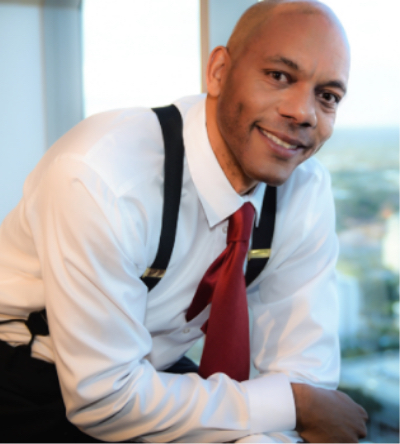
Hello, welcome to the Call I Got See it podcast. I'm James Keats, and joining me today is a man who approaches every show with a me against the world mindset. Tunde Ogunlana Tunde. Are you ready to show them why sometimes you get labeled as an outlaw?
[00:00:58] Speaker B: Maybe. Or maybe I'll just hit him up. We'll see.
So there you go.
[00:01:02] Speaker A: That would be the reason.
[00:01:04] Speaker B: Yeah, sometimes you do, you know, so.
[00:01:08] Speaker A: Yeah, yeah.
[00:01:09] Speaker B: Number four. But I don't know if they can see me. That'll be, you know.
[00:01:14] Speaker A: They can't see you, man. You got your mind made up.
[00:01:18] Speaker B: Yeah.
[00:01:20] Speaker A: No more pain, man. No more pain.
[00:01:22] Speaker B: Well, no more pain.
We'll just leave it in the hearts of men. That's what it is. Yes. Yes, for sure.
[00:01:28] Speaker A: Before we get started, if you enjoy the show, I ask that you subscribe and like the show on YouTube or your podcast app, doing so really helps the show out. We're recording on April 28, 2026 and Tunde. A few days ago, the U.S. department of justice charged a U.S. soldier with several crimes related to the soldier's alleged use of confidential information back in December of 2025 about the then upcoming nobody knew about or nobody publicly knew about raid that captured former Venezuelan President Nicolas Maduro. And he used this information to make and win bets on what was going to happen with that. Nobody again, nobody outside new upcoming raid.
Now, while the law's apparently coming down on this soldier right here, we've seen a steady stream of reports over the past few months that suggest that people in the know, so to speak, are using insider information all through these prediction markets to place and win bets on what they know about. And seemingly that's the lifeblood of these prediction markets. So it's really difficult to tell from this whether the soldiers being charged. This is like an isolated incident or the start of a trend.
But in any event, Tunde, what is your reaction to the story?
Both the fact that people apparently were betting inside information, were betting on the capture of Maduro before it happened, and anything like that, and that we now have people facing accountability for that through These prediction markets.
[00:02:57] Speaker B: Yeah, I think it's fascinating that it is a continued, I say this with a smile, a fallout of just the proliferation of this technology, the Internet, all that. Because as someone who is involved with the capital markets, on my day to day life, I'm a financial advisor, I deal with the stock market.
There's a lot of regulatory frameworks in that space.
And one thing that I know very well and have to deal with from a compliance standpoint and continuing education for my licenses is about things like insider trading, arm's lengths, transaction, moral hazard, all these kind of concepts that I think have been developed through kind of the last 100, 150 years of kind of the way business and industrial age and corporations kind of evolved. And I think that.
[00:03:46] Speaker A: Well, hold on, you got to say specifically, they evolved from people doing all these things.
[00:03:51] Speaker B: Yeah, and that's what I mean, kind
[00:03:53] Speaker A: of like what's happening right now. And then they were, think about it in place in those places.
[00:03:57] Speaker B: When these rules were put in place in the 1930s was on the heels of other huge technological changes, starting with the women. We could be as the late 1800s with the things like the telegraph, but then you got radio and then soon film and all that. And so again it created a different environment for people to, let's say, talk about these things, share information, promote them. Right. Sell these ideas to other people in a way that you couldn't do in the 1850s. So I think this is another example of it, and I'll say this with a smile and then hand it over to you for your thoughts, is I don't like the idea of insider trading. People with inside knowledge about something getting ahead of the public, let's say, or using that information to screw someone on the other side of the trade, or bet, so to speak. But, but I'll say this, if anyone's going to do it, I'd rather see that it's the guys actually busting down the doors and putting their life on the line in the front lines. You know, let this special forces guy, the Green Beret, make some money off this thing versus.
Dodge drafting kids of the oligarch elites who send everyone else's kids to war. So I say that as a joke. I don't like anyone doing it. But that's why I say the only guy that got busted was the lower low level guy who's the soldier. But the people at the top who like you said, we know of, are making insane amounts of money, not hundreds of thousands, but millions and hundreds of millions. No One's going after them. So that to me is something to be discussed as well.
[00:05:32] Speaker A: Well, yeah, and that conversation will happen. I mean, I think first I want to take a step back and the idea of these prediction markets, because they are relatively new, the idea behind them is not relatively new. You know, like the idea behind them goes back throughout human history. You know, you place a bet with a friend or someone, you know, and hey, you know, this is going to happen or it's not, you know, flip a coin, you know, and between me and you, it lands on heads, you give me a dollar. If it lands on tails, I give you a dollar, you know, because. And that's essentially what's happening here to some degree.
These prediction markets aren't casinos in the way that we think about them. Casinos has their, have their own set of regulations now that's been, you know, flip the table's been flipped over on that as well, you know, in the last 10, 15 years. But casinos, you're gambling, you're betting against the house. You know, the house sets the odds and you know, sets the odds so that they continue to make money. Ideally, no matter what ends up how it gets played out, pays out.
These prediction markets are set up to facilitate bets between people. They make money just on fees and you know, oh, you got to pay this much to set up a bet or something like that, or a percentage of earning or winnings and stuff like that. But, but they don't make much. So they're not stacking the system against the betters, so to speak, so that they always come out on top in the way that a sports book or a casino is. They're the facilitator.
So as a result, you know, like I think that actually leads to, okay, well then who's placing all these bets? What we've end up seeing a lot of times is that a lot of times the bets, then the people that are out here driving a lot of this business are people with inside information. They're the house, so to speak. And not really because they're not setting up. But if people can have arm's length bets against each other, so to speak, or is this going to happen? Is Nicholas Maduro going to get deposed from power before January 31, 2026? Well, if you're working on the operation, that is the secret operation that is planning to remove him on whatever date, but that date is before January 14th and you place that bet, you know that at minimum. Now you don't know if the operation is going to work. But, but you know, at minimum, that the efforts underway by a serious organization in the United States military to make that happen. Whereas the people who are betting against you have no idea. Like, they're just saying, oh, well, what are the chances he'll be deposed from power? Well, he didn't get the power. Deposed from power January 31, 2025, so. Or February 2025. Like, all these other months go by and he doesn't get deposed from power. So I'm playing it. So in a sense, it's like a sucker's bet, you know, like. But the sucker, the person who's making the sucker is the person who has the inside information, not the house. So the question of regulation and so forth becomes more complicated in that sense. So just laying that aside to me, I share your concern. Like, okay, well, this guy's getting targeted for this. Now, to be fair, the prediction markets are trying to.
Supposedly trying to tighten up on insider trading. Because what I joked with you about is, like, I thought that was the whole point. Like, I thought that was. It looked like sucker bets to me. Like, oh, okay, I know this is gonna happen. I'm gonna.
That it will. Against people who have no idea whether it will or won't. But just like the action. So supposedly they're helping the government, you know, find these people.
But for me, you know, like, I think this is the type of setup that it is. Like you said, the technology. You're not doing this against your friend or somebody in the next. In the same room with you. You're doing this against random people. You have no idea who they are. They all been brought together into this virtual room and making these bets. It seems like this. This part of it is inevitable. Now, may. Maybe it'll. With stuff like this, it'll start shaking itself out and a rule structure will come up around it to prevent it. Maybe not. We'll see. You know, but to me, that's what really stands out is kind of the sausage making of it. Because you got this new setup.
[00:09:14] Speaker B: Yeah. And I think, you know, it's interesting, I wrote some notes while you're talking because I put. I started thinking about the national security risk that this can create.
Then I put advert.
Sorry. Adversaries can hack systems to look at the beta. Pigs don't care about collateral damage. And then I put regulation. So I'll go through it.
[00:09:34] Speaker A: And now you gotta make sense of all that meaning.
[00:09:36] Speaker B: Yeah, exactly.
That's how my notes look. Let me go now. Explain it. So, no, the point is, as you were talking, I'M thinking like, yeah, actually this is a national security thing because you're right, if it becomes known that there's these poly markets where you can actually bet on things like military actions or engagements or will NASA's do a rocket this way or that way, certain betters, you might not know their identity, but they might win 60, 70% of the time and you might start following their bets. So what I'm saying is an adversary country can say, hey, that account keeps making more accurate than not bets about clandestine operations.
Maybe we can start following that and know that if this person's getting it right, maybe the United States is, you know, we can start figuring that out. So and my point is, is that someone might say, well, shouldn't that person think about this sick country and our national security? And that's why I said pigs don't care about collateral damage.
[00:10:33] Speaker A: Right.
[00:10:34] Speaker B: Individuals that have a certain, you know, mindset are just going to do for them. And that's why I said the way to protects us is then regulation. Where. And that's, I like you're saying that's where the sausage is being made now, in the system where the new technology allows for this type of trading and this type of money making and betting and now we got to catch up to it. But that was my, what I expressed as my concern is what I'm seeing is they got one guy who's a lower level guy, he's a soldier, you know, so he's going to be the example. But who else is getting, is making money, is taking advantage of this information and are they going to also be held to account or is it only going to be the little guy when he gets busted? That's kind of my concern of the way I'm seeing it handled.
[00:11:19] Speaker A: Yeah, I mean I think that of course that is concern. I think that we should, the broader question that we're looking at these prediction markets which are enabled now, they seem to be here to stay. And so the broader question is how much of a corrupting influence in a lot of different areas could this have on individuals, on people and on society and the, you know, like once you understand that type, is there a way to kind of minimize that? You know, like I'm not one, like Brazil just banned all these things, for example. You know, I'm not one to immediately jump to the idea of hey, we need to ban this, we need to ban that.
Yeah, I think it's good to kind of identify what's the problem. Not, it can't just be, oh well, this Makes people more inclined to do bad things. It's like, well, at a certain point, you know, you have to have a principle on that freedom is going to be freedom and includes the freedom to make mistakes. I think, as you pointed out, national security is the kind of thing that you may want to take advantage or pay close attention to. But also the idea of fair play, maybe something we want to try to preserve, I don't know. And when I look at these things, I just don't know that that's possible.
Whether or can fair play be protected by and large, because the people that are most motivated to use these types of things are insiders, so to speak. And part of. I've seen some theory and I'll put this in the show notes people talking about this from an economics models modeling standpoint, it's almost like these prediction markets rely on insider insiders driving the conversation and driving the betting, so to speak, because they're the ones who are going to be willing to really put money up on that.
Other than people who have real problems like gambling problems. It won't necessarily be somebody being so sure that, that the price of oil is going to go up and down the next day and then that day, if you don't have information on that, like, I'm just so sure it's going to like, it's like, well, no, you, it may or may not, you know. And so unless you have skin in that game or have information that suggests that, you know, like we saw this with, you know, like with, with a lot of the Iran war stuff where people were placing bets and doing stuff based on what was going to happen.
Oh, well, yeah, the price of oil is about to go up and it's like, oh, yeah, cease fires off and it's like, oh, the price of oil goes up, you know. And so it seems like again, like the people who will be most motivated to use these types of things and to drive the action would be the people with insider information. So I don't know, but I don't need to know right now. It's kind of, I would say, the point like you, generally speaking, the regulation can come after you, after something happens and you can see the pressure points. And so that's kind of where we are. I'm fine being there in that moment. Right now. Right now we're in the wild west face of this. And so we should see this, we should get the information and then figure out how can we put this together in a society that, you know, still can have national security, still can have some level of. Some measure of fair play when it comes to these things and how these type of prediction markets play into that. I just don't know that the answers. Well, I don't know that we have the answers to that yet. Like, we kind of need to see it play out a little bit more.
[00:14:22] Speaker B: I agree with you. And that's. As you're talking, I'm thinking, like, let me make sure the audience knows I'm not a glutton for regulation here.
I think you say it well, that certain things need to happen first. The system needs to then see it happen, and then we can then figure out what rules and regulations and guardrails need to be put around this.
And I agree with our sentiment here that, yeah, it seems like national security things should kind of be dealt with pretty quickly.
And that's why I think it's.
[00:14:51] Speaker A: And that also may be why this guy.
[00:14:54] Speaker B: Well, that's what I was gonna say.
[00:14:55] Speaker A: And very publicly apprehended as well.
[00:14:57] Speaker B: Yeah, that's what I'm important. That's exactly what I was going to say. It's important that he was made a symbol. Right? Like that they arrested this guy saying, hey, look, you can't be. And that's why I was saying I'm joking at the beginning of our conversation, that I'm glad it was him. Meaning I don't like anyone doing it. But, hey, the guy that's putting his life on the line, hey, at least he made some money doing this. When all the other people making way more money than him are being left alone, apparently. Or maybe they're getting blackmailed behind the scenes to. To pay money somewhere else so they don't get busted by the SEC and the Fed. So that's that. But one of the things that, again, stuck out to me as kind of a capital markets guy, at least through my lens, that I see a lot of the world through, is one of the articles cited that this is a $1.1 trillion market or soon will be. You know, that's what it's estimated to be, this poly market thing. And I was just thinking, like, it's interesting because to your point, James, about the insider stuff, and kind of like I was thinking, like, this is another example where we're creating actually new economies. This is where the. Where we are in the information age. Because when I thought about it is like, how is this different than the stock market? Well, it's very different if you think about the industrial age, the idea of capital.
The market was created as a way for Businesses to issue shares, the owners got to either go into debt buying, you know, issuing bonds, or they got to go share by issuing stock and having their own equity diluted. But by doing that, they receive more capital. And the idea is they can then use that to grow the company and the shareholders benefit, hopefully. Because if the company does well, then everyone's making money as the share price goes up. This is very different,
[00:16:41] Speaker A: but a lot of the stock trading that happens is not that. You know, like a lot of the stock trading that happens is day trading and stuff, which this is very similar.
[00:16:49] Speaker B: Yeah, that is a lot of it. But at the end of the day, it's still an asset that someone is owning in the end of the day, whether you own those shares for five minutes or five years, you're a shareholder of a corporation that's doing something like, I'll hold up my iPhone. If I own Apple, I know that I own shares of that.
[00:17:06] Speaker A: Bottom line is my man, I recognize that.
[00:17:10] Speaker B: Yeah, it's an imagined order, but it's now real in our society.
[00:17:14] Speaker A: What I'm saying, though, contracts that you own a piece of.
If I own a piece of this contract in Kalshi, I can even cash it out early if I want to, to cut my losses.
[00:17:23] Speaker B: I don't disagree with that. That's like a futures contract or commodities.
[00:17:27] Speaker A: My point is, if I'm just betting on. They seem very similar.
[00:17:31] Speaker B: But no, if I'm betting on will Nicolas Maduro be the leader of Venezuela tomorrow or not? There's no capital in that. There's no contract in that. That's just a bet. And that's what I'm saying. If that becomes a trillion dollar slice of our $30 trillion economy, it's another example where the technology is just allowing new realities to be created. And that's just different than, let's say, a capital market system where there's still a certain. And you're right, it's an imagined order asset, but it's still capital. And shares in a corporation is still an asset. An idea of who's going to.
[00:18:06] Speaker A: It's an asset in the imagined order, though. But. Okay, I mean. Correct.
[00:18:10] Speaker B: But a bet on whether someone's going to get kidnapped or not is not an asset in any order. So that's all I'm saying.
[00:18:17] Speaker A: It is in this order. It is. It's something that can be bought in, sold.
[00:18:20] Speaker B: So you said a contract loan. You can appreciate the value.
[00:18:23] Speaker A: Well, it can appreciate in value, it can depreciate in value. It can be owned, it can Be sold all of those things. Yeah, that sounds a lot like property to me. You know, and so.
[00:18:31] Speaker B: But the imagined order that you're contract can be. But the bet. But what I'm saying is the idea of if something's going to happen tomorrow or not is not something you could take around for a long time and say I'm going to sell it to you three years from now and in exchange for value, a share of a corporation or a note of a bond is. And so that's it. But anyway, I know we got.
[00:18:51] Speaker A: Well, let me. I have one more thought that I wanted to share.
The. I think that you initially talked about the concern about who gets punished here. And I thought that that was a really good point and I just wanted to flesh that out a little bit more because as specifically with my view on these types of things is that this is the, you know, like I said, the wild wild west or the sausage making and all that other type of stuff like we do, the society is better off in my opinion when something new gets introduced like this, provided it's not something crazy like genocide or murder for hire, you know, it's like those things. So okay, yeah, that's bad. We don't, we don't need to see it play out in order to figure out how we can, you know, best, you know, utilize what it may be able to offer while minimizing the downsides. But for something like this, you let it play out. I think right now, you know, we've seen that, you know, with, with lots of things. We've seen that as far as how the Internet and so forth proliferated in the 90s and things started happening and then the regulation came through and then it was like, okay, yeah, we got something that's at least workable now. It's not perfect.
The concern I would have, it really relates to the kinds of people that here in the United States we've been putting in power.
They don't seem to be the kind of people that would have society's best interests at heart. And I'm saying this over a long period of time, generally speaking. And maybe this is the nature of our political system now where it's very money driven. And so people who have the best interests at heart may not be the best fundraisers and the best fundraisers are going to be the people who we're going to be putting in power, more or less. But I look now like even like society Learned in the 20s, 1920s and you know, 1920s, 1930s that insider trading in stocks was bad.
And it's illegal for most Americans. You know who it's not illegal for, though, is Congress, the people who makes the rules. You know, the people who make the rules are able to this day, people complain about like, oh yeah, Congress, all the insider trading they're doing, all how their wealth grows because they know where to put their money. You know, before they approve this or for this, all this stuff's going on. So my concern would be that while the rules may start getting applied to rank and file people, rules may be getting created, regulations may be created that'll apply to everybody else, that the people who are making the decisions actually that are most consequential, the rules may not be applying to them. And they may be still taking us off, making us feel all the downsides of this because they're taking advantage in ways because they're just not wired in a way or thinking in a way the kinds of people that they are. They're great fundraisers, but they're not saying, hey, if this is good for everybody else's society, this is probably good for me. And so I think that's a larger societal hole that we have right now where just the nature of the people that are successful in running for office and maybe, or, or maybe they're good people, but what they have to do to get in office and to stay in office warps them in a way that makes them, you know, changes their perspective or their, what they value or what they think is important. So that challenge is going to be there as well. And so we'll have to deal with that when it comes. But ultimately, you know, again, like, we get to witness this, we get to see the sausage being made and see how these, these, how the regulation framework will come around this. And we're, we're in again. We're in it now. Even the companies now are trying to self regulate some, which is a defense, you know, trying to, hey, we'll, we'll do it, we'll handle it, you know, trying to have the federal government involved, you know, so we'll see how that plays out. But ultimately, you know, like, we'll see.
It's a bet, so we'll see how it goes. But we appreciate everybody for joining us on this section. We'll have a second section of this show as well. So please join us for that as well. And until next time, I'm James Keys.
[00:22:24] Speaker B: I'm Tundegu online.
[00:22:25] Speaker A: All right, we'll talk soon.
Welcome to the Call like I see it podcast. And for the second part of today's discussion, we take a look at recent research into the stages that our brains age in. And Tunde, you sent me this. I thought it was fascinating.
And we've looked at. I remember in previous shows, you go back a year or so, we looked at how the body ages in stages. And the second, puberty, and the third, or not puberty, but kind of aging jump that happens. And then the third one that happened, one happens in the mid-40s, one happens in the mid-60s. This reminded me of that. And this is done, like, doing brain scans on thousands of people. So they'll do all these brain scans over various ages. And then what they were able to isolate and observe is how the structure and the operation of the brain changes at various points.
So what stood out to you in this piece? And we'll touch on the different stages. But what stood out to you in general as far as the findings about the stages that our brain ages in and, you know, how they're defining those?
[00:23:32] Speaker B: I'd say a couple of things stood out. One is just, it's amazing the technology can, you know, as computers and all that stuff, improve on our ability to assess and look at, like, brains and scans and all these things that we.
[00:23:48] Speaker A: Yeah, yeah.
[00:23:49] Speaker B: And it's fascinating because I was reading about the actual MRI technique just real quick. And what they did is, at a molecular level, they push water through the, like, brains. And they. And they watched how the water diffused in different parts of the brain. And, you know, long story short, I just think it, like, you know, 30 years ago, that technology just didn't exist to do that.
[00:24:08] Speaker A: So that's murder 30 years ago. Yeah,
[00:24:13] Speaker B: we're thinking about that.
Like that. That third Hannibal Lecter movie where he was having dinner with the guy after he cut his brain open. Remember, he did, like, Game of Lobotomy, you know, like, that kind of thing. Right. That's how you'd have to do it. But so that's my point is just saying that with the advance in technology, it allows us to see into how we work as human beings. So it's kind of fascinating in one way. The second thing was, like you said, I think the knowledge about how the body ages has been a little bit more advanced than the brain. So this is very interesting because even as you said, the show we did about a year ago about the body aging was, you know, still somewhat of a linear thing. I felt like this one was really interesting because it almost created this idea, like, in these different stages of brain development, you can actually almost be Like a different person in a certain way. The way your brain is wired because of how.
Basically how it's working in those stages. So it's. I just found it fascinating in many ways.
[00:25:19] Speaker A: You know, really, it's interesting. I found it very analogous to the one because the idea that the body ages in spurts, and we had jokes about it because mid-40s was one of the spurts, and we're both in our mid-40s. And so that was kind of an interesting. Just look at it, because what we.
[00:25:36] Speaker B: No, no, no. We were in our mid-40s. We're now in our late-40s.
[00:25:40] Speaker A: I'm still in my mid-40s, man. I don't know what you're talking about.
But for this one, it was equally fascinating to me.
[00:25:46] Speaker B: That is 47. Mid or late. I'll let the audience figure that out.
[00:25:50] Speaker A: 46, but I think you're 47.
[00:25:53] Speaker B: Okay, my bad. Yeah, see, see, if you're six, you're still mid.
[00:25:57] Speaker A: Don't push me further than I need to go at any given moment. But the idea that was presented here, I mean, once we saw that the body aged in spurts, this wasn't shocking to me, that the brain does as well. Now, the spurts don't seem to line up necessarily. Well, I'd say, like, there were.
The stages they gave for the brain was like, zero to nine, which is like, you know, your. Your initial development, and then that's like the child phase. The one that was really surprising to me was from, like, 9 or 10 to, like, the early 30s. Like, 32 was adolescence. So we normally, in a society, we think adolescence ends, you know, 18. You know, you're old enough to.
You're legally a person. You know, legally an adult. 21, you're old enough to drink. 25, you're old enough to rent a car without crazy, crazy, all these extra fees or whatever. But they're saying the adolescent brain kind of has the same structure and function all the way to 32. And then you got the adult brain from, like, 32 to mid-60s, and then the old age after that.
And then they had an extra category of super agers, which they don't know a lot about because there just aren't a bunch of people who have well, functioning brains over 83. But that's a thing that will continue to be explored. But the adolescents one was just shocking to me. But. But in a sense, what really stood out to me about that, though, is that historically, people became adults at an earlier age, because culturally, that was what was Required to sustain like human beings, you know, human beings, cultures, societies. To be sustained. You had to get married early, you had to start working. You know, your parents, you know, weren't gonna be able to. Like, your parents weren't living till 70, 80, you know, necessarily.
Right now we observe this thing where people don't kind of. They don't get married until later, they don't have kids till later.
I wonder if that matches up more with this, you know, where. Because it's not necessary, you know, in many situations to get married at 21 and start having kids right away. And from a societal or from a. To be able to work your farm, you know, and have enough hands to help on the farm. It's not necessary to do it by choice with, you know, without being spurred to do it. People are naturally delaying that stuff. And I wonder if that's kind of the adolescent brain being like, well, if I don't have to, to get married, settle down, start having kids right now, maybe I'll wait. And then that calculation may change Once you get into 32, 33, it's like, you know what? Maybe it's time I'm ready to do something different.
I came up with that. But the article said something also about how like in your 30s, people sometimes change friends and stuff like that, which I found very interesting as well. Just kind of like, like you said, you become a different person to some degree. So I mean, it was. There were a lot of little nuggets in there that I kind of took and ran with. And then also just in the article that was. It was really interesting, you know, when we think how just we operate in society.
[00:28:50] Speaker B: Yeah, I agree. And I think that there was a lot there. I think one of the things that, to me, I've heard this a lot from the scientific and psychology community over just the years, last couple decades of my life, which is that we're about 80% hardwire our brain by our eighth birthday.
And I've seen some as far as 10 years old. But it's again, it matches up with this idea that the first nine years are the brain really in that initial stage of elasticity and development.
So that's when I thought about what I had heard from what I just said about from the psychology and scientific community. I was like, okay, that makes sense, right?
Maybe they didn't have this kind of research done yet on the brain, but the evidence that they saw pointed to that the majority of us humans, by our 10th birthday, a lot of our hardwiring is set in mentally So I was like, all right, that's interesting. And then to your point about friends, you know, where your life is maybe by your mid-40s compared to your mid-20s, is not always about the fact you got a job and all this. A lot of times it is the changes as a person. You don't want to behave like you did at 25.
And that's an interesting thing too, because a lot of us, like you said, culturally, now, a lot of us older people.
Let me pick on me mid, late 40s, think about how many people around my age, younger too. But, you know, getting into their 50s, even 60s, dye their hair, they get, you know, facelifts, they get. Everybody by a certain time wants to look younger.
[00:30:24] Speaker A: That's what they do. And still behave like they were in their twenties.
[00:30:27] Speaker B: No, but this is the thing. It's funny. Like we joked. I remember we had a show about working out and you said, ask me point blank, why do I work out? I was like, vanity.
[00:30:36] Speaker A: You know what I mean?
[00:30:37] Speaker B: Just being honest. Like, yeah, I like it. Looking good. Why not? But the point is, is that's a joke. But it's like, there's no way I want to go back and be 20 again. I had a good time in high school, college, all that stuff. I don't want to relive it. Like, I'm. I feel like if I want to hung out a bunch of teenagers, I'd be pissed off. Like, I just not. I'd be annoyed. You know what I mean? And so the thing is, is that that's why this is an interesting thing to me in that way, is that you start looking once you're old enough, you start looking back. And I'm sure when I'm 80, if hopefully I live that long, I can look back and give my opinions on the. On the different stages, right? About what it's like when I'm after 66 and how I felt. So I just think that it's very interesting. And one of the things I wanted to actually ask and turn over for you is the fact that we have this kind of information now.
Do you think we should be. Like you said about, in earlier human societies, the way that life was, People had puberty around their teens, and then we all were, you know, humans were generally agrarian, so you had to be on a farm and all that. So people just had to have kids and start working by their late teens, early twenties, and human beings didn't live as long. So now the fact we do have people in their 70s and 80s that can still function and be leaders in society and businesses and all that.
Do you think we should, society should look at how we I guess organize people in the workforce and certain responsibilities in society differently or not based on this information?
[00:32:05] Speaker A: I don't know that we have. I think that we kind of do already.
I think of pilots, you know, and actually that was something I mentioned to you the other day is like, you know, I think that in places where it seems like where we have decided we care, we have put restrictions on it, you know, like. And so and pilots being an example of that, like, which lines up actually pretty good with this information, you know, where, when pilots aren't allowed to fly anymore, broadly speaking, I don't think we have to do anything as far as like whether political leadership or corporate leadership needs to have to have sunsets to where they move to advisory roles or something after a certain age.
I'm not one to think that that's necessary at least as of right now. From what we see now, if things become an issue, then maybe we would have to, we do see political leadership we've seen recently and, or recently in the last 20 years or so, people just staying on, they're not leaving once they get in power. And we know the seduction of power is real. So it may be difficult for people as they get older as they're not as capable to let go. But I think we live in a democratic society so I think that we have mechanisms to take care of that. Now whether we do take care of that or not is something totally different. And so maybe I'm one to look at us, the people and say okay, well if we don't think that the people who have the old People brains post 66 should be running the show, then we need to look at ourselves and say, okay, well should we be voting for those people in that kind of sense? So I'm not one to think there should be hard and fast rules.
This can be updated though. This belief of mine can be updated if thing if, if with more information, if we say hey, like yeah, the people who are in power or there's so many people over 66 that they just, they're like, oh yeah, we screw you guys, we're not going to let you vote us out or whatever then you know, maybe we look at it at a certain time then. But society does very specifically, you know, like the decision was made a long time ago for presidency, like hey, you got to be over a certain age, you got to have an adult brain, not an adolescent brain to run for president in our country. So, you know, it's not the craziest thing in the world to me, but I'm one to think that if we're going to live in a democratic society, we should sort that stuff out ourselves. You know, and with corporate corporations, it's a little harder, but still, you know, it's something that you hope competition would make sure that the people on the inside will want to make sure that they have the sharpest minds working for them. And if they decide elsewhere, you know, they make another decision. And if they, you know, like, competition has to take care of that, it shouldn't be a regulation necessarily. Unless, again, unless situation changes and for some reason you feel like you need
[00:34:49] Speaker B: to at that point.
All right, so my response is going to be, now you're going to force me to be a glutton for regulation because.
Totally disagree with you on that one.
But in fairness, I'm going to say this. I looked up on my Google machine here.
The average age for.
We're almost there. The average age for the United states Senate is 63.9 years. So I'll round 64. Oh, God. So if you, as you said, they only need a few more terms to get to 66. So we're good.
[00:35:20] Speaker A: Well, that charge is six years, one term.
[00:35:23] Speaker B: So in one year, one term. Sorry, we'll be there. But now, so here's the thing, man, it's funny you say that. This is where I know we're finishing up the conversation here, but I'll have some fun where we disagree. The reason why I'm already like, man, it's already time to regulate. This is because you were already there. Like I'm thinking, and this is not to knock on individuals or people listening who they like politically and all that, because it's, you know, to me, it's beating up, you know, our system right now. Not, not a political party, but I mean, you're literally, since January of 20,
[00:35:54] Speaker A: you know, you're beating up the voters.
[00:35:55] Speaker B: Yeah, that too. I'm happy to do that. But, but it's, it's in, in since January of 2017.
Seriously, it's 2026 now.
So for nine years, we've been led by two different presidents from two different parties that both have shown signs of mental decline and frailty in that side, like mental frailty.
So you're right. And it's not just them. It's the discussions. We had a couple shows on people like Dianne Feinstein, Ruth Bader Ginsburg. We got Chuck Grassley, who's The head of the Senate Judiciary Committee, the guy's in his mid-90s, he's like 95.
So my point is, is that not to pick on them as human beings, but I don't know anywhere else where a 95 year old is expected to perform at a high level every day.
Like you would want somebody who's the head of the Judiciary Committee in the United States Senate to be able to perform. And so I do think that we're already at a point where whether it's term limits, I think that's a gracious idea. Like you said, at a certain age, maybe they don't get totally kicked out of a system, but they got to serve maybe an advisory role or something where they're just not the person responsible day to day. Because I think it's unfair to us as the public because it's kind of like any of us who've been around people over 85.
I don't believe that Maxine Waters at 89 as the ranking member of the Democrats and the Banking Committee really understands crypto or that RBG, before she died with cancer in her late 80s, was really out there writing her opinions and all that herself about what she talked about on the Supreme Court.
[00:37:36] Speaker A: So. Well, I mean, you had to your point. We had also another one, Kay Granger was in a nursing home during her term.
[00:37:44] Speaker B: Yeah, thank you.
[00:37:46] Speaker A: There's a lot of examples. We couldn't remember them all. We won't be able to remember them all. There's a lot.
[00:37:51] Speaker B: But hold on, but is it say that again, a sitting member of Congress was found in a nursing home while she was serving her during her term?
[00:37:59] Speaker A: Yes.
[00:38:00] Speaker B: And that was in the last five years. That didn't make like national like it would. We didn't all stop as voters.
[00:38:06] Speaker A: What does it say about our voters? You know, like so, so you're saying take, take the choice out of the voters hands then?
[00:38:12] Speaker B: Correct. That's the regulation I'm, I'm clamoring for is that we as the public seem to not be. Is this like putting on seatbelts or not driving drunk? People have shown that they're going to drive drunk. So we have a log about not driving drunk. Just like we had a show just now. The first part of this discussion was about insider trading. People who have insider knowledge have shown that they will make use of it. So we have regulations against that. So I do think, like you said, people in positions of power have shown that they're not going to give them up voluntarily and then they don't perform when they reach a certain age. So what are we doing here? That's a whole.
[00:38:44] Speaker A: I think part of the problem also though is that it's so lucrative to be in power that it's like, like, I know, like with professional athletes, for example, sometimes not all professional athletes, but some of them, it's like, hey, I'll hang on. The mentality is like, I'll hang on as long as I'll keep.
[00:38:58] Speaker B: Yeah.
[00:38:58] Speaker A: Because this kind of money, you know, like, hey, I'm going to make, you know, three, four million dollars a year. This kind of money is not something I'm just going to walk away from until they tell me, hey, I can't, I can't do it anymore. And so if being in Congress gives you access to all of these perks, and then even worse when we assign seniority and people get more privileges based on how long they've been there, then it does create an incentive structure which I'm always very persuaded by. Incentive structures leading to bad outcomes. Then you got to really look at the incentive structure. It does create an incentive structure for people to stay way too long, to stay longer than they're really able to contribute positively. So, so yeah, I mean, but whether we need to change the incentive structure or whether we need to actually outright ban, that can be, my mind can be changed on this. Like, again, I would prefer to be able to look to the voters to solve this problem. But you may be right. We already may have enough information to say, hey, you know what? The voters can't solve this problem in the same way that the founding fathers were like, yeah, yeah, we're not going to have some 25 year old dude running around president. We're just not, you know, like they decided that it was like, yeah, that's not going to be on the table. There's plenty of people that are.
[00:40:08] Speaker B: Back then, 35 was like mature.
[00:40:11] Speaker A: Well, but according to this research, learned
[00:40:13] Speaker B: that's an adolescent brain.
[00:40:14] Speaker A: Well, but no, according to this research, 35 is an adult brain.
[00:40:18] Speaker B: I mean that's out of adolescence. You're right.
[00:40:21] Speaker A: Yeah. Like, so, so like maybe they were, they, maybe they wanted something as well, like that. So yeah, we got to have at least an adult brain, you know, but. And so maybe we undermine that by saying, no, no, we don't even need an adult brain. You can have an old age brain and be president. Maybe we undermine that, you know, like, so I don't know.
[00:40:38] Speaker B: So here's what I'm getting out of this. I'm going to run for Congress so that I can become fabulously wealthy. No, no, I just want to. No, I want to do it now so I can become fabulously wealthy and stay and not leave. Because then whenever someone does try and regulate it, I'm going to do everything I can to vote against the regulation.
[00:40:55] Speaker A: Well, then that's kind of the way it works right now.
Yeah, I know.
[00:40:59] Speaker B: That's what I'm saying. You're convincing me that instead of trying to fight it, I just need to go run into it and.
[00:41:04] Speaker A: Because.
So ride with the wave, man.
[00:41:07] Speaker B: So.
[00:41:07] Speaker A: But no, I didn't expect us to go down, you know, explicitly down the political path. But the information itself, though, remains fascinating, and I think that it does comport with our observation is kind of what I'll say at the end, because even our expectations of people, you know, like. And I was joking earlier when I was like, oh, yeah, people in their 40s. And you're talking about people dying their hair and stuff. I think a lot of people, once they get past a certain age, they do look at their 30s. You know, maybe they're. They're mid to late 30s, you know, early 40s, as kind of a peak when they were, you know, we. What is it? You know, like, there used to be, you know, the 30s, the new 20, and then it became 40s, the new 30. And it just, like, there's a sweet spot there from a. From an adulthood standpoint that I think people recognize once the. The physical demands of being agrarian kind of filtered out for many people. So I don't know, but the information is fascinating. I hope they keep. Keep giving us more. More tidbits about how we work and so forth. And to your point, we could figure out if there's ways we could put this information to good use in ways to give us better outcomes in society.
[00:42:11] Speaker B: So.
[00:42:12] Speaker A: But I think we can wrap this from there.
[00:42:13] Speaker B: We appreciate for joining us and everybody vote for me when I run for office. There we go.
[00:42:18] Speaker A: There we go.
[00:42:19] Speaker B: In some election, I haven't made up my mind when and all that, but. But I'll let everybody know when I make those fun.
[00:42:24] Speaker A: Hey, man, you gotta pay to say that, man. And this becomes an ad paid for by tune day.
So.
[00:42:32] Speaker B: But no, we can't boost it because now it's a political ad. I can't boost it? Is that what you're saying?
[00:42:36] Speaker A: Subscribe to the podcast. Rate it, review it, tell us what you think. Send it to a friend. Till next time. I'm James Keys.
[00:42:42] Speaker B: I'm Tunde Oglana. All right. We'll talk soon.
I.