Episode Transcript
[00:00:00] Speaker A: In this episode, we discuss the 1999 documentary Paul here I Stand, which explores the life of Paul Robeson, a great American who for decades was one of the most famous men in the world, but now is largely unknown.
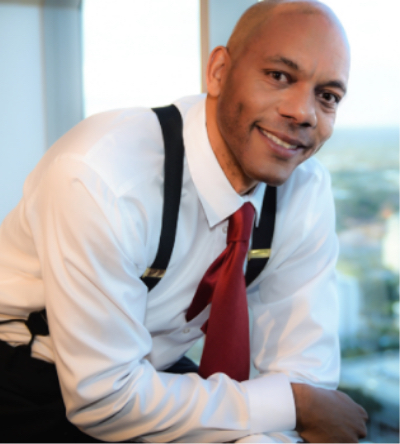
Hello, welcome to Call Like I see a podcast. I'm James Keats, and joining me today is a man who certainly has the size, charisma, and deep voice to dominate any room he walks into.
Are you ready to show him how you keep things rolling along like that Old Man River?
[00:00:49] Speaker B: I don't know, but that's a lot of pressure, so I'm going to.
[00:00:52] Speaker A: And you thrive under pressure.
[00:00:54] Speaker B: Try and live up to your.
[00:00:56] Speaker A: Every week, man, everybody.
[00:00:57] Speaker B: Yeah, I guess my voice will give it away that some of your stuff is right, but I will leave the height and all that stuff alone for now.
[00:01:08] Speaker A: All right. All right.
Now, before we get started, if you enjoy the show, I ask that you subscribe, like the show on YouTube or your podcast app. Doing so really helps the show out. We're recording on February 3rd, 2026, and today we continue our streaming between the Lines series and take a look at the documentary Paul Robeson Here I Stand, which was released in 1999 and is currently available to stream on YouTube or in other places. It's directed by St. Clair Bourne for the PBS series American Masters.
The documentary is one of the defining works we have that's seeking to provide a look at the spectacular rise and jarring fall of Robeson in society and also how his life shaped and was shaped by some of the most significant events and circumstances in the 20th century.
So, Tunde, to get us started, just big picture wise, what stood out to you about Robeson and his amazing talent? Talents, I should say, accomplishments and fame.
[00:02:09] Speaker B: I would say this. I was enlightened. A lot stood out to me, which I know we'll get through in this conversation. But I mean, one of the things, honestly, was how little I knew of him. I knew of him as an American singer. That's what I.
[00:02:22] Speaker A: Particularly in context of that fame.
[00:02:24] Speaker B: Yeah. And. Well, I would just say, you know, the. The fame, like, I understand why I knew about him after watching the documentary, meaning he was a famous person, famous order, all that, you know, singer, all that. But I think what I was really surprised about was really that I would say a Renaissance man in many ways, a man of.
I mean, just one example for the audience here early is the fact that he played in the NFL while going to law school.
[00:02:54] Speaker A: I played law school at that.
[00:02:56] Speaker B: I mean, could I be playing? It's Just. And that's what I mean, I knew him as Paul Robeson, who sang Old Man River. You know, like, that kind of sounds like, wow, I didn't know he played in the NFL. Like, that's just, that's what I mean by this very diverse life and also this very strong intellectual prowess. That's all I can say. I mean, he's a really.
I mean, I would assume maybe today they might classify him as a genius. I mean, he seemed very, very. Just intelligent, smart.
[00:03:24] Speaker A: I think. Yeah, I think that that's probably a safe thing to do because like, it almost reads kind of like somebody wrote this for a movie. Like, oh, yeah, this guy, All American athlete. He was all American, you know, when he had an undergrad, you know, at Rutgers. You know, Ivy League lawyer, world class singer, world, world class actor, world class orator, knew 12 languages, valedictorian of his undergrad class. Like, it's like, hold up, man. How's everybody? How's this guy at the top of all of these different things?
And this is like world class top, not like, oh, yeah, good, but like, this guy is, you know, the, one of the biggest Broadway stars. And that the reason I added in when you said like, how little we knew of him, because I would agree how little I knew of him was like, there's a lot of people, the world is. There's a lot of people I know a little, just a little bit about, in the history of the world, but that this guy was such a giant, not just, you know, in American culture, you know, at a certain time, you know, he's traveling around, you know, selling out concerts everywhere and, and so forth, and then selling out Broadway shows and integrated Broadway. And you're playing Othello, the first black, like actual black person to play that role, which was written by a black, but written for a black person, excuse me, you know, which then has intimacy with a white woman on stage. Like all these barriers, all this stuff, and for, for someone to have all of these things about them. And I know about him only in the context of Black History Month. You know, like, it's like, oh yeah, Paul Robeson, great man. But it's almost like, like what it made me think of was like, okay, this would be like someone in 20 years not knowing who are only hearing about Muhammad Ali. Like, oh yeah, I heard about that guy, but I don't really know, you know, like, I don't really know anything about him. Like he, what did he do? He was a wrestler, right? Or something like that. It's like no, he was actually one of the most popular men in the world. And you know, boxer, he's just, he was world class in one thing in that sense, you know, but. And there's stories actually, you know, there's some parallels in a couple of places in terms of how they, they, they, they had battles with the US Government about different things and about constitutional rights, I should say, more than anything. But yeah, like the, the, the, the contrast with someone so well known, you know, because again, somebody who wasn't well known that we don't know a lot about now makes sense. But someone who's so well known, but it's so that so little discussed and so little known about now was just, you know, was mind blowing to me, you know. So, I mean, I do want to keep us moving on the conversation, but one of the things I wanted to mention to you in particular about him was, or I wanted that to discuss, just raise with you about him was kind of the singing and the like, the documentary. A lot is spent on him, like the baritone voice, the singer, him as a singer, him selling out concert, being able to sell out concerts, and then also the acting piece from the arts perspective and the man that. And I know I set this up a little bit, but not fully, but from the art standpoint, his entry into that compared to maybe like you saw Jack Johnson a few years before in the sports, you know, which people talked about. And then what we saw later in the 20th century seemed like it was not uncommon for blacks to be in the arts in that way. But what did you. Was there anything that really was significant to you about that, as far as Robeson as the artist? Because again, there's a lot of things to talk about in him. But I did want to ask you about.
Because the singing and the acting seem to be such a big part about his story and his legacy.
[00:06:40] Speaker B: Yeah, I think there is. I mean, look, as you're talking, I'm thinking in my head we're in the year 2026 right now. To think about 100 years ago that like you said, it was totally uncommon to see any black people in the art scene in terms of major things like Broadway plays, mainstream. Yeah, Doing Carnegie hall, you know, all that stuff. Obviously we know that black Americans have been in the arts since the founding of this country and prior to it, but the ability to be allowed in and to be accepted as an equal in the art space, I think it's just hard to believe today with you think about entertainers as singers and athletes and all that stuff. So I think you're right. James does speak to something bigger that we, I don't think, can really grasp right now in today's. How the world is today about how it's hard for us to appreciate this kind of. Yeah. Like this caste system was so rigid and deep, you know, that because of the color of your skin, you were just limited from actually participating in large parts of society. And so your point about him being a barrier breaker in that way with. Specifically with Othello, and like you said, not just him getting the acting role and starring in this role, because, remember, prior to this, the way they would display a non white person, especially a black person, on a stage or in a movie was a white person in blackface.
[00:08:09] Speaker A: Yeah.
[00:08:10] Speaker B: So this was the first.
[00:08:11] Speaker A: And also, though, just real quick, because they would also.
The roles were always clownish roles or very heavy, stereotypical roles. And that was something that he pushed against, made progress again in his career in the arts. As far as.
[00:08:25] Speaker B: Correct.
Unpack that real quick. Why was that? It was to make, unfortunately, at the time, the. Culturally, the white audiences feel comfortable that they were more dominant than the black characters. And to keep them feeling that way in kind of real life, you know, this. This cast system, it was to keep.
[00:08:41] Speaker A: Everybody in their place, so to speak. You know.
[00:08:43] Speaker B: Correct.
[00:08:43] Speaker A: Yeah.
[00:08:43] Speaker B: So it's an example of kind of art imitating life, or vice versa, but.
[00:08:48] Speaker A: Reinforcing art being used to reinforce whichever.
[00:08:51] Speaker B: One, you know, chicken or egg thing. But just my thought on that, James, really, is because you say some important things there, too. Not only was he the first non white person to star in a role, that was the actual. And there was something said in the discussion of William Shakespeare himself, casted on purpose, this African role.
And I think Robeson talked about that. The genius of Shakespeare.
At some point, no one could deny that this character was who he was. And I think the second one you said was the intimacy with a white woman in public, which is also a big taboo thing. So these are things that, to me.
[00:09:30] Speaker A: Are.
[00:09:32] Speaker B: Again, bigger than the idea I grew up with that this guy's a singer. You know what I mean? Like, you realize the documentary does a great job of bringing forth how consequential these moments were in society as well.
[00:09:47] Speaker A: No, no, for sure. I mean, the other thing I'll add to that and then we'll move on, because the controversies and the struggle is also a big part of the story. But just on the kind of the rise, how and why, and the scale of which, how big he got was also the international piece that this guy goes over to Europe and it's again, easily selling out theaters for singing or for acting for Broadway type stuff, for plays and such.
And at certain times, because of the level of racism here, Europe and, you know, like, whether it be, you know, London or whatever, would be like his home base. And he would be operating out of there a little bit more and more accepted, have more freedom to do more things. Now, they still try to oftentimes squeeze him into stereotypical type stuff, but he was pushing, always pushing back on that. But nonetheless, you know, like the international acclaim that he got, like I would venture to say, and people, I'm the first one to say this, but that as of now, he's more popular, more famous outside of the United States, and we'll get to why that is in a second. But outside of the United States than he is in the United States, which again, for a black man in the first half of the 20th century, you know, that was born in the United States, that's just.
That's very interesting, you know, again, for someone who's so far off the consciousness now.
[00:11:06] Speaker B: Yeah, well, I think, look, unfortunately, and this is separate to his, just the documentary in his life, but there's a lot of examples of black Americans who, prior to, let's say, the mid-60s, when you had the formal caste system here in the segregation, would go to Europe and find, enjoy great lights. I mean, you know, elephants.
[00:11:26] Speaker A: I mean, even all the way into the. Yeah, even all the way into the later 20th century where that would happen.
[00:11:30] Speaker B: Yeah. So I think that unfortunately is just part of the reality of the history of, I guess, both continents. But, you know, both, you know, the European continent and the United States. And what's interesting, I'll just say this, the documentary, I felt what I got. One of the things I got out of it was just this contrast between white American insecurity about blacks and the European kind of. I don't know if I want to say lack of insecurity, because obviously there's racism in Europe. I mean, they did do the Holocaust over there, but it's just a different culture. That's kind of what I got of it, too, that America was about dominate, you got to stay in your place, all that. And like you said, in Europe, it was kind of like, well, you're different. So we have our stereotypes and all that, but we don't need to control you to say.
[00:12:17] Speaker A: There's a word for it. Actually, there's a word for it. It's called dehumanization. And now, he actually said, we hear that in the documentary, and that's, in his words, is saying that when I step out in Europe, it's the first time I feel like a full human being.
That's not saying there's no racism there, but it's a different type of racism. It's a different type. Like the dehumanization, the extent to which in the United States, the ruling class, so to speak, went to dehumanize. Not just even caste, but dehumanize was something that was when he'd go elsewhere, be like, man, you know, like, these people are just regular racists. You know, it's like, woo.
So it's kind of crazy, but I mean.
[00:13:00] Speaker B: But that's what I'm saying. I'll be honest, James. I felt that way when I lived in Australia.
[00:13:03] Speaker A: Interesting.
[00:13:04] Speaker B: I could feel a difference. Of course, there was some prejudice there and things, but it was different than here. Here is like a whole. Like, it's like a dom. They want to dominate you here. There it was like, all right, if they don't like you, they don't like you, and they don't want to be around you. And if they like you, they like you. It's a very different feeling overseas than the racism here.
[00:13:23] Speaker A: Yeah, yeah, yeah. So, I mean. Well, that's. I would say probably, or not probably for sure. Even more so then. So. But the second part I wanted to get to on this discussion, though, it really deals with that. You can call it the downfall, but there was, you know, a second crest, or at least a return from this.
Not a crest as high as he was in the. In the 20s and 30s and the 40s even, but during World War II, like, a lot of the things you'll see in the documentary. We're not here to do a book report, you know, but you. You. If you watch documentary, you'll see, you know, like, the. How the. His life is affected, you know, with the Roaring twenties and the Harlem Renaissance and how he's. He's affecting that and being affected by it.
And then one of the big things, though, would be, you'd say in World War II, like, when World War II was initially starting to happen, he. He was in Europe, you know, and he was actually working to try to push back against, you know, from an activist standpoint, from raising money standpoint, from a performing standpoint, to push back on the fascists popping up in various countries. You know, Spanish Civil War was one that was specifically mentioned. But when the United States goes to war, he comes back to the United States and goes and tours around trying to sell, help sell war bonds, you know, try to help fund and finance the war effort and so forth, using his talent, using his popularity and so forth.
And so we see that, and that's like, you know, American hero, so to speak, doing all that kind of stuff. And the way that celebrities are oftentimes used by the US Government for that. And I say that without, you know, any kind of. I'm not trying to say anything there. I'm just, you know, say, I'm just calling it like I see it, so to speak. But after the war effort, when the United States pivoted to saying, okay, we're trying to take out Nazism, we're trying to take out fascism to our main enemy is communism.
Well, Robeson had made over the course of the 20s, 30s and 40s, and then the world was a different place at that time. He had become much more of a socialist in mindset. He had done work with close to lower class, working class people in England, for example, and became close to their movement and helped their movement out during the course of the time. And so when this switch happened, he was still looking at the Soviet Union as saying, hey, yeah, this, these are the kinds of people that could be a positive influence on America in terms of how to treat people fairly, in terms of not letting capitalists dominate and turn everybody into slaves, basically and so forth.
And the memo that. You can't talk like that, he rejected that memo. I'm not gonna say he didn't get it. He rejected it. He still tried to push that same issue, which as America's hostility towards communism and the Soviet Union in the Cold War and stuff picked up, he then becomes a target here. And this is. He gets blacklisted and all this stuff. So, so this guy goes within a 10 year period from selling government bonds and being a celebrated guy to being branded a communist, having his passport canceled and being blacklisted from the show. So that arc, you know, like what, I kind of wanted to lay it out so we could talk about it, you know, without, you know, doing. And again, the, the, the documentary goes into it in much more detail and we'll have that in the show notes. But what about that art, you know, kind of stands out to you in, in, in terms of this guy going from, again, the top to someone who can't do anything?
[00:16:29] Speaker B: Yeah, there's a lot there because it's a long life. So I think that there's a couple things. One is from going from top of the top to where he ended up in terms of his relationship with the United States government and all that. I think it's just we've seen this in many examples historically, and this has nothing to do with this comment with race or anything like this. It's just about when you're useful, you're useful, and when you're not, you're not.
So I think to your point about when he was selling war bonds and he was kind of selling the American story and our side about the war and beating fascism, he was useful for our own domestic propaganda and all that stuff. And then when he kept talking, he starts talking about labor and capital and all these things that industrialists tend to not want to hear about.
And the politicians that get funded by industrialists, then they didn't want to.
They didn't have too much time for him. So I think that one, to me is par for the course with kind of how that works with power. But I think what it represents and what we saw in the documentary, which to me was interesting, was this genuine through line that he had emotionally and culturally about labor rights and workers rights and I think.
[00:17:44] Speaker A: And how those connected to civil rights and.
But go ahead.
[00:17:48] Speaker B: Yeah, yeah. And even I would say maybe just in a different way to say than civil rights, I would say just people's happiness in their everyday life, you know, kind of workers. Right. Because again, you think about this guy was born in 1898. So around 100 years ago, he would have been, you know, close to 30 years old. And around 100 years ago, in the mid-20s, we still had no labor laws, really.
Children in the United States were still going down to work in coal mines.
You had sharecroppers working 14, 15 hours a day with no rights. So you had a lot going on in this country that it was the Gilded Age. Right. The industrialists, the capitalists, were taking advantage of the workers, and we were still waiting for the New Deal type of stuff. So I do think that there's.
I want to keep going, but I'll hand it back to you in a sec, because one of the things that I think is a tie in that, again, we're not really welcome to discuss, for whatever reason, was the fact that, again, he's born in 1898, but his father was a slave, had been a slave prior to 1865 in the United States. Yeah. So the idea is that Paul Robeson grew up with an idea already being born into a family where his father was owned by somebody when he was born, and because of the Civil War, that he Was no longer a slave when Robeson was born. But the idea that Robeson understood this dynamic between labor and capital, because a slave is the ultimate form of free labor.
[00:19:22] Speaker A: Right.
[00:19:23] Speaker B: That's when the industrialists don't have to do anything for.
Except provide food and make sure the person can work.
[00:19:28] Speaker A: Keep it alive or keep it slave.
[00:19:30] Speaker B: Yeah. And then. And remember, I'll hand it. Well, I was just gonna hand it back to you about the things like his experiences in the coal towns and kind of how that integrated his thought on this. This isn't a race thing. This is a labor capital thing. That's.
[00:19:44] Speaker A: Yeah, no, no, for sure. I mean, remember his dad, you know, like, was born a slave but became a.
A preacher, you know, which was kind of where. That kind of shows you a little bit where his. His intellectual power came from, because, you know, that was kind of the. One of the few lanes available to. To the thoughtful black guy at that time, you know, so to speak.
The thing actually. Well, the word I want to start on is something you mentioned to me actually offline, was the kind of the juxtaposition of. This is a guy who was breaking barriers his whole life, you know, social barriers.
This was a guy who. There's controversy when he's performing in. They talk about performing in Cincinnati, performing Othello, and they got people coming up from Louisville, and they're like, oh, these people gonna act crazy when, you know, he kisses the white woman on the stage and all his other. Like, it's tense, you know, and they're like, so he does all that stuff, doesn't get blacklisted.
He starts talking about workers rights, and, you know, workers need to band together and fight for a more fair shake and so forth. And now, admittedly, the country. The tenor of the country was one that was reacting to these things in a severe way, in a way that they weren't in the 30s, for example. You know, like, we saw this same kind of dynamic in Oppenheimer when we talked about that movie a while back, how people that were just in social circles in the 30s, and they were like, yeah, yeah, you know, socialism, yada, yada, yada. All of that stuff in the late 40s, 50s, was like, yo, who were you at a party with? You know, like, it's. And so the. The tenor of the country changed. But, yeah, you made the point in particular to me, which I thought was a very good point, was like, man, all the stuff he did as far as breaking down, you know, Jim Crow type of stuff or segregation type stuff or White, black barriers. People weren't crazy about it, but they, you know, like they, they kind of just let that play out in the art scene. But once he, once he started going at economic stuff like, hey man, workers got to fair, shake the workers need, I'm going to use the language of Teddy Roosevelt, workers need a square deal. You know, then it's like, yeah, this guy's got to go, you know, so. And I'll add on to that though, that this is also a similar arc to what we've seen and talked about with Martin Luther King, that when towards the end of his life, he started to focus more on the economic injustice and how that was a key to unlocking the social justice. And it was around that time when he started talking about that stuff and started talking about organizing with not just black people, but bringing working class white people in and saying, hey, we got to work together to make this happen.
I know he did some stuff, specifically in Chicago, for example, with that. It was around that time when he was assassinated. You know, it wasn't, it wasn't when he was marching on Washington and everything. And it was more focused on race. So, you know, it's, it's just interesting to kind of see, you know, because a lot of times we get very focused on the racial stuff and rightfully so, or at least understandably so, but it's possible that there's higher level games being played that, that once people start talking about that, it actually, it actually draws more negative attention towards them than even the race stuff. Even though that race stuff feels like it's drawn a bunch of negative attention.
[00:22:46] Speaker B: No, I think you're right. And let's point out in the documentary they alluded to the fact that. And it was murky. They weren't sure. They gave possibilities of both, which is he either tried to commit suicide or he was drugged and someone tried to make it appear that he was, he tried to commit suicide, they said scarring on his wrist. And basically also that's why there was speculation that maybe, you know, high levels of the US government did try and interfere with his life because of all.
[00:23:17] Speaker A: And we now have all the records of how much they were following him.
[00:23:19] Speaker B: And stuff, the FBI and his psychological state had changed, like as if.
[00:23:23] Speaker A: Yeah, that was much later on.
[00:23:25] Speaker B: Yeah, yeah, but I'm thinking like maybe MK Ultra or one of these experiments where they tried to like give him LSD or something where that might have altered his, his mental state. And so there was, that's what I mean, it was murky. But to Your point that it appears that that kind of murky stuff didn't happen until what you're talking about. Right. That it wasn't happening in the 20s and 30s when he was just a guy on stage integrating and kind of breaking down some of those barriers. That was acceptable, at least people seem.
[00:23:53] Speaker A: To care a lot about. But yeah, to the true.
[00:23:57] Speaker B: Like, if we get conspiratorial, rather to the true hierarchies of power, even that was acceptable. But once you started messing with the kind of labor capital equation, that became unacceptable. So it's an interesting observation.
One of the things I'd like to do is also make another observation I found pretty fascinating about this.
I'd say honest and genuine desire to have a solidarity with workers around the globe.
And one of them was, because you alluded to this earlier, this conversation, that he spoke 12 languages.
Again, let's go back. And that's what I mean by this guy was a genius. This guy's a son of a slave.
You know what I mean? And I don't mean that as a pejorative. I mean that he didn't grow up in high society with tutors and all this stuff, but somehow as an adult, he had the wherewithal and the mental curiosity and the ability to focus, to learn new languages already. Like, not when he was a kid. Right. So my point is, is that this was part of their discussing his relationship with the Soviet Union.
And one of the things that really impressed me, I just thought it was amazing that in honor of solidarity with the Russian workers, he sang and he upset the Russian government by doing this. He sang like a worker song, the whole thing. He sang in fluent Yiddish.
And I felt that that was persecuting.
[00:25:24] Speaker A: Weren't they persecuting Jewish people at that time?
[00:25:26] Speaker B: Correct. Yeah, because that was around the height of the Russian pogroms.
And that's what I'm saying is he recognized that a pogrom in Russia in the early 20th century was no different than burning down Tulsa in Oklahoma or the red summer of 1919. Meaning the Jewish population in Russia was a small enough population that was kind of just a pressure valve where they were the bottom caste and they were allowed to be attacked by the rest of society. So if the peasantry didn't like the wealth imbalances because the tsar had all this money or whatever, you know, just go, Just go do a pogrom. Go, you know, burn down that Jewish town and let it out. And that's no different than in the Gilded Age. Right. The height of Lynching and the Klan, the same thing. All these poor white Americans in Appalachia and the south, they're looking at some of the industrialists and capitalists making all this money. And, you know, instead of dealing with the labor and all that, you know, the actual workers rights, it's a little bit easier to go beat up your neighbor and go hang them from a tree, right. And let your, like a ceremonial killing, let your emotion out that way. And so I do think that the idea of divide and conquer by those at the top is evident when you begin to look at it that way. And I think he recognized that early on, like early in the 20th century, he realized, man, this is a game. Like, all these guys are just getting us to fight each other at the bottom, and they're just running away with these bags of money.
And that, to me, just stood out. A black American singing in Yiddish.
[00:26:52] Speaker A: There's another phrase for that, too, that's called the history of the.
[00:26:54] Speaker B: What's that?
[00:26:58] Speaker A: So, yeah, you know, it's interesting, James.
[00:26:59] Speaker B: Because I think you're right. I'll say this. I think in the last, let's say, 100, 150 years with radio and all this modern technology, I think what's happening is the population is able to see this. Maybe, maybe a percentage of the population, not everybody. More so than maybe we were able to see it, you know, thousand years ago. But I think you're right.
[00:27:17] Speaker A: Forever.
But no, well, I do want. There's one last piece I do want to get to, and that is kind of looking at it from today's perspective. You know, like one of the. The big controversy when he got his passport taken away and he was brought into, you know, the, the. The House, the. The Committee for UN American Activities, you know, the McCarthyism stuff, which we discussed a couple months back.
But what part of it was. Is the allegation that he was a member of the Communist Party or he was a Communist or whatever, which he never said that he was, but they were. They would bring him up and say, okay, well, you have to say that you're not. And so his position was that that would be against the First Amendment. You can't make me say something. You know, they'd be under the penalty of government or government penalty. And so his dispute where they took his. They took his passport because he got blacklisted here in the United States with people or the government able to pressure individual.
The. The just venues or whatever, and also the public, you know, so, hey, we're going to burn this down if this Guy performs or whatever, but they couldn't do that overseas. So they take away his passport so he couldn't go make money overseas. And so it was like for eight years he lost his passport and this until the Supreme Court gives it back to him because he went, takes, goes to the Supreme Court, wins the case, saying, the government can't do that to you. They can't make you declare something, say something on penalty of government or having government penalties for that.
So in the context of today, that's really interesting and also just the context of the rest of the 20th century, because I mentioned earlier how Muhammad Ali also was a person who, from a constitutional standpoint, took a stand, was penalized by the government, and then ultimately vindicated by the court.
So these are two instances where you see the meaning of the Constitution, the teeth of the Constitution. The Constitution, always remember, is about restraining the operation of government. It's not about the people have the rights, and then the government is given rights only what they're given by law.
The government's not supposed to be able to do what they want to do. They only can do what says they can do. And they can't encroached into the rights of people as particularly ones that are protected by the amendments of the Constitution. But by and large, that's supposed to be a default. Two places where you have these men being persecuted under the Constitution. Not the only ones, though, but these are guys that were able to get these more teeth to these constitutional protections. So in today's context, and even we see what's going on today politically, where we have the government oftentimes is trying to exceed the bounds of its enumerated powers is kind of the lawyer way to say it. But just the things it says they're supposed to be able to do.
What do you think of Robeson's controversies, though, now?
Not trying to look at it and what was happening, just context there, but with the full context that we have now, either in terms of his importance to America becoming a more perfect union as it's gone, or just in general and just from a societal standpoint, how we would perceive something like that now?
[00:30:08] Speaker B: Yeah, I think so. The part about his impact on America becoming, quote, unquote, the more perfect union, I think we can say he had an impact, especially after, like I said, being enlightened by this documentary of how famous he really was. I mean, he was the most famous black person in the world at one point.
And like you said, that's a big deal. I mean, that's like being Michael Jordan or Muhammad Ali, like, you're saying, like. And the fact that we people of our age, let's say born, and we're born in the late 70s, that we grew up going to elementary school in the 80s and high school in the 90s, we never really learned about this guy. Yeah, right. So that tells me something. That tells me that for some reason, the system just like. And this is how it happens. We keep, you know, we live through little examples of this because, James, you and I, and we've said this various times on the show live in a state where the contribution of black people in American history was banned to be taught in high school in 2023. Not 1963 or 1863, but the year 2023.
And it was because that teaching, the inclusion of people who look like you and I in American history to new students of new generations would be considered woke. Apparently, not all Americans contributions can be respected equally. So I think.
[00:31:26] Speaker A: Can I say that differently just real quick? Yeah, you could say woke, but really what it was deemed is that teaching these contributions was a threat.
Threat to something or to someone or some group, but it was a threat.
[00:31:37] Speaker B: So.
Yeah, and that's a good point. Right. So that's what I'm saying is someone decided by the time you and I went to elementary school or high school. Right. That the story of Paul Robeson, to use your words, was a threat. A threat of something. Right. And again, that's why we would suggest people watch the documentary. You can make your own conclusion about what you think the threat was, but I think you nailed it, James.
It seems like he didn't become an enemy of the state, quote, unquote, until he really got into economics.
And that was it. It was, you know, everything else they'll let him slide with, except for when you start talking about labor rights. Yeah. And, you know, I mean, I just think it's kind of plain as day.
And so that's why to me, it was just a fascinating experience. The last thing I'll say is if he were today, he actually would remind me of someone like Bernie Sanders. I think it was the closest interesting without. From the political, you know, like, activist side. Yeah, correct. Yeah. Just a guy that is really seems genuine about workers and their rights.
Minus the curmudgeon look and the crazy hair.
[00:32:43] Speaker A: Well, yeah, you'd have to combine a bunch of people because he's like. He's like. You have to grab a bunch of people from atop a bunch. A bunch of different fields and then say, okay, yeah, here's The.
[00:32:52] Speaker B: No, you know what he's like? He's like, if you smash Neil DeGrasse Tyson and Bernie Sanders together, and you.
[00:32:57] Speaker A: Gotta get an athlete in there, too. You gotta get, you know, LeBron James in there, too. And then.
[00:33:01] Speaker B: Yeah, exactly what's happening here now, we'll get. We'll give him Deion Sanders as he played football.
[00:33:08] Speaker A: Now.
[00:33:08] Speaker B: But you're right, it's like. It's like smashing the kind of a few of these different personalities together, which.
[00:33:13] Speaker A: Again, if somebody does a movie, they'd be like, that's. That's ridiculous. You can't take all these. Oh, yeah, he's as smart as Neil DeGrasse Tyson and as athletic as LeBron James. And, you know, like, it's like, get out of here, man. That's ridiculous. But, you know, it happened, you know, so to speak. But for me, you know, like a couple of things. I think you made a really excellent point, and I just want to double down on it a little bit, that the idea that, yes, it was decided amongst a group of Americans with enough power to change the conversation, that knowing about him, just knowing about him was a threat. And the reasons for that, we won't know 100%. We have our. We have the things that we think. But what it reminds me of, actually, and this is in our lifetime, the how this was. This trajectory was changed because the same kind of thing was happening with Malcolm X, which the knowledge of him was being pushed and pushed and pushed and pushed out of kind of the public eye. And what really changed the trajectory of that, when we were alive this time we were alive, was when Spike Lee did the movie about Malcolm X. And that led to a resurgence of learning about him, learning about where his arc, you know, and his arc is instructive, you know, in terms of how he went from militant, you know, how he continued to evolve, though he didn't just lock in on one place, but he continued to evolve and continue to kind of learn and be flexible in his mind in terms of how he saw things and ended up in a different place than where he started, you know, in a short life and a short activist driven life. So, you know, these things just because actually it is trying to be pushed out, you know, like, there's there are multiple sides to this. There are people who don't want people to learn about Paul Robeson, just like there were people didn't want people to learn about Malcolm X, people about Malcolm X stuff they lost, you know, because Spike Lee and other people were able to make that a thing in the culture and now many people know about it, you know, so hopefully, you know, like the, the, the. This doesn't get lost, doesn't get so far away from us that there are, there will be opportunities when, when there's still, when the knowledge is still out there, there will be opportunities to, to increase public awareness of, of Paul Robeson. Because, yeah, I mean, this is the kind of guy that makes you feel good to be about being American. Like again, like they got this superhero guy, you know, who's just excellent in like four or five different things, you know, world class excellent, like four or five different things and had principles and stuck to his principles when they were popular. Stuck to his principles when they weren't. I mean, this is, this is the kind of thing, you know, like that you, you, you aspire to, you know, so to speak. So, so yeah, I mean, I was, I was happy. I was, you know, aware of him, but I had not seen the documentary, so I want to make a point to see the documentary. And this was 20, you know, 25 years or 26 years ago this thing was, was came out, but it was still helpful. And then a couple other things we'll put in the show notes as well, some, some other things that, that kind of go on about Robison. So. But yeah, overall I thought it was excellent, you know, highly recommend it and you know, we definitely appreciate everybody for joining us on this episode of Calling. I see it to bring more awareness and knowledge about Paul Robeson and also some reflections on that. So subscribe to the podcast, rate it, review it, tell us what you think, send it to a friend. Till next time. I'm James Keats.
[00:36:09] Speaker B: I'm Tunda Van Lana.
[00:36:11] Speaker A: All right, we'll talk soon.